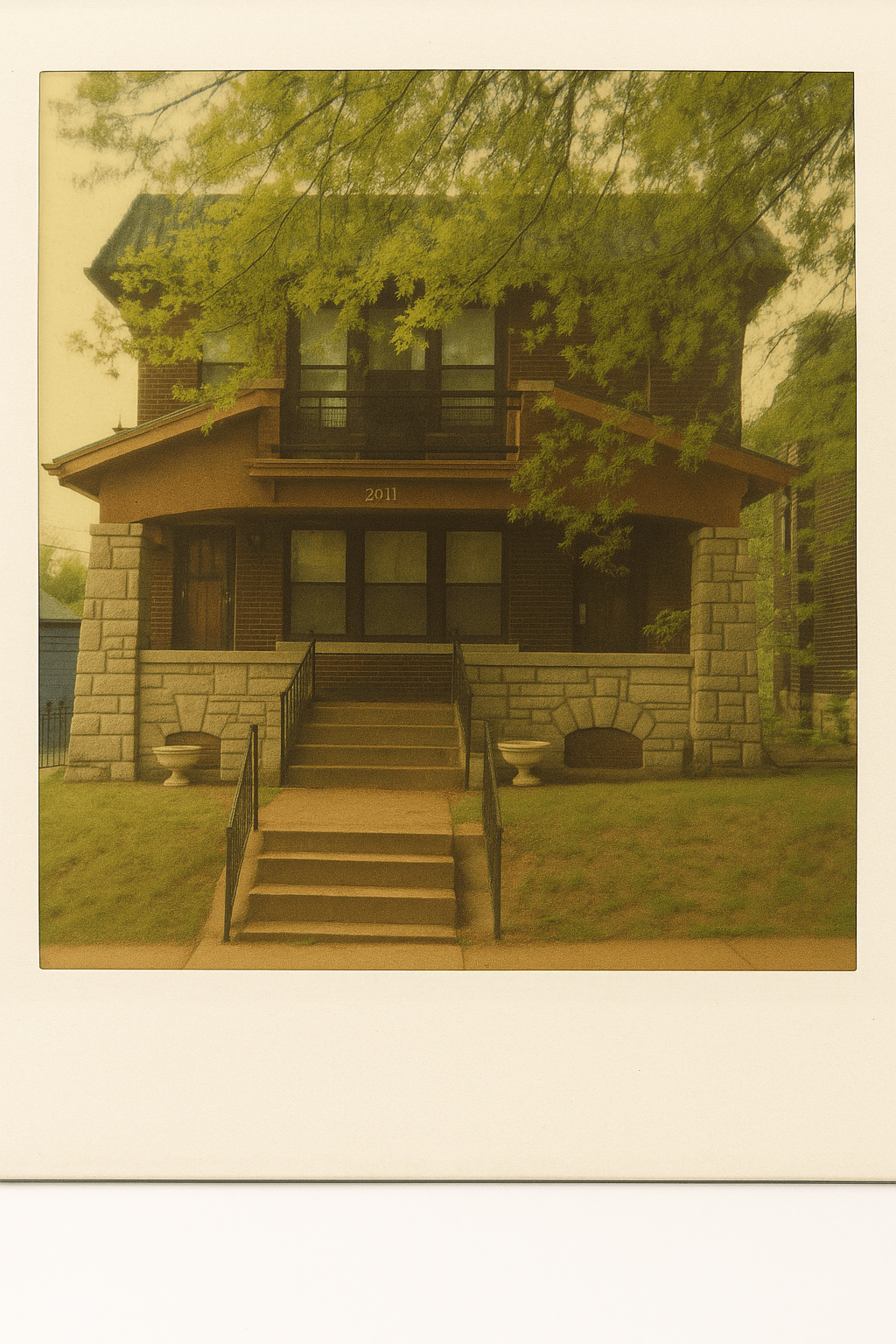
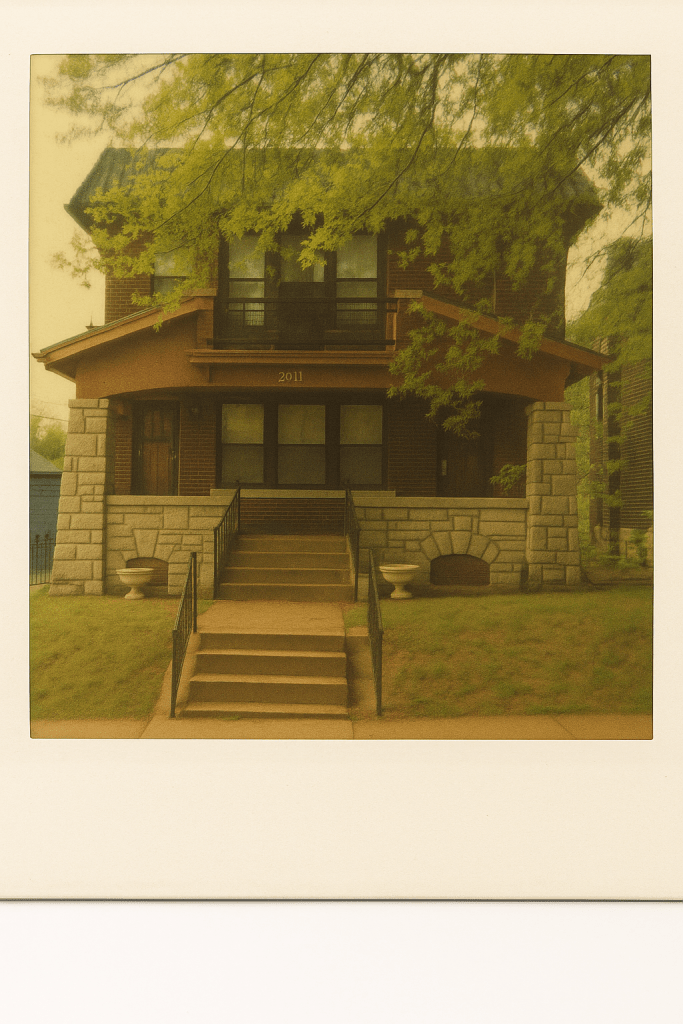
The house my mom and Aunt Elaine grew up in—and the one my Grandma Wollberg still called home when I was a kid—stood proudly at the corner of Grand Avenue and Dover Place in South St. Louis. It was a sprawling two-family flat, the kind of sturdy brick home the city is known for, sitting right next to the alley on Dover. To me, it was more than just a building. It was a second home, full of the smells, sounds, and comforts that made childhood feel safe and steady.
What I remember first is that porch. It stretched wide across the front, shaded in summer, perfect for waiting on family or neighbors to stop by. From that porch, Grandma would wave to anyone who passed—whether she knew them or not. When company came, the porch filled with voices and laughter that seemed to spill right out onto the sidewalk.
Along the side yard, Grandma’s rose bushes bloomed in neat rows of pinks and reds. She tended to them faithfully, clipping the faded petals with the same patience she showed in the kitchen. Those roses were her pride, and to this day, when I catch that familiar sweet scent in summer, I think of her yard on Dover Place.
Inside, the house was big but never felt cold. The kind of warmth that radiators used to give off in winter is hard to describe—dry, steady, and somehow comforting. You could hear them hiss and tick quietly as the house settled. The upstairs apartment was almost always empty, which made it our secret playground. My sister and I would play up there, our voices echoing through the empty rooms.
The heart of the house was always the kitchen. That’s where Grandma made her famous fried chicken—crispy on the outside, juicy on the inside, and always cooked in her electric skillet. I can still see her standing there, apron tied at the waist, while the smell filled the whole flat.
And then there was the living room—the place where I sat beside her on the couch watching Wrestling at the Chase on Saturday evenings. The curtains would be drawn just enough to block the glare, and she’d react to every body slam as if the wrestlers were right there in the room with us. Those nights were part of our ritual, a shared moment of excitement.
Down in the basement, an old furnace sat like a relic from another time, with a coal chute still attached from the days when fuel was delivered straight into the cellar. Everything about that house whispered history—from the creak of the floorboards to the scent of rose soap in the bathroom.
It might have been large by any standard, but to me, it always felt cozy. Maybe that’s because Grandma filled every corner with warmth—real, steady warmth that came from her presence, and the life she built there. Even today, when I drive down Grand and turn onto Dover, I still half-expect to see her standing on that big front porch, waving at me.
Some houses are just places we visit, but others stay with us long after we leave. Grandma’s house on Dover Place was more than brick and mortar—it was, on many days, the heartbeat of our family.

 Welcome!