Wilfred Wollberg was born in St. Louis on May 9, 1902. To me, he was always something of a mystery—a man whose shadow passed in and out of family stories but never stayed long enough to truly take root. Around 1928, he married my grandmother, Selma Mueller. Having known them both, I’ve often thought of them as opposites that somehow worked, at least for a while. Wilfred was showier, outgoing, and a bit of a charmer; Grandma was quieter, subtler, and content to live life without the fanfare.
Their first daughter, my Aunt Elaine, was born in 1931, and my mom, Janice, followed in 1937. Not long after, my mom became seriously ill with appendicitis as an infant, and it was during that hospital stay that everything changed. The story goes that Wilfred, always the ladies’ man, took up with one of the nurses—a woman named Dema. Somehow, she convinced him that she was pregnant, and in 1938, he divorced my grandmother.
That sort of thing just didn’t happen back then. Divorce carried a deep shame, especially for a woman. Grandma had what they called a “nervous breakdown” and was hospitalized for a time. She even underwent shock treatments, which were common then but sound so cruel now. She recovered, at least outwardly, but I don’t think she was ever truly the same.
She stayed with her parents and my Uncle Ollie in South St. Louis, while Wilfred went north—first to the city, then to North County—with Dema, who, it turned out, was not pregnant after all. He saw my mom and Aunt Elaine occasionally, though he was out of their lives more than he was in them.
Aunt Elaine once told me that when they were little, Wilfred gave them each a quarter for allowance—then crept into their room later that night to take it back. That story somehow says more about him than any photograph ever could.
He reappeared briefly when Aunt Elaine and Uncle Dale were getting married. He was supposed to give her away but balked at paying part of the wedding costs. Then, years later, when I was born, he surfaced again. Maybe the idea of being a grandpa softened him. I remember him as a good cook, fun to be around but not a healthy man. He seemed older than his years, worn out by a life of choices that didn’t quite turn out as planned.
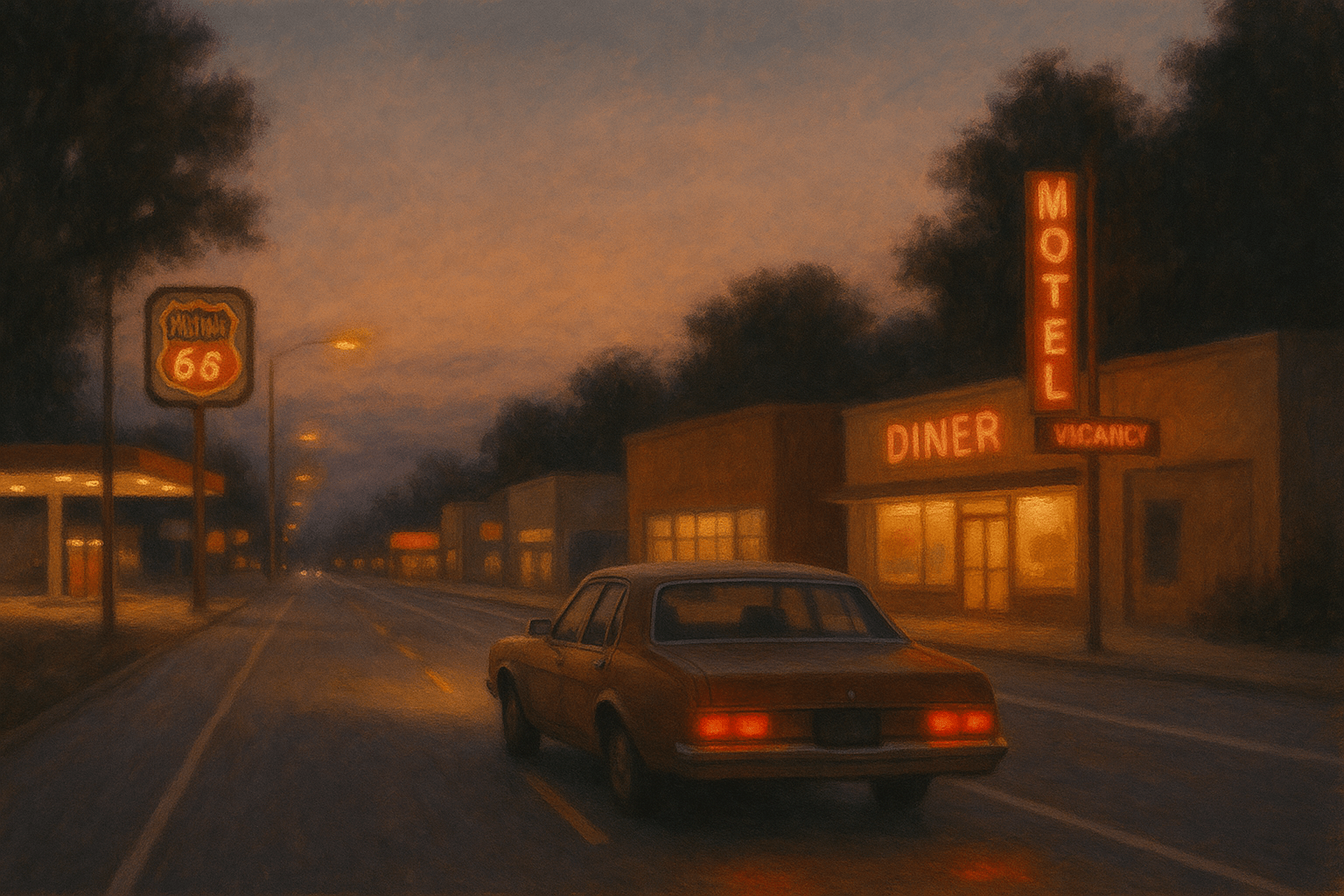
One night in April 1974, my mom got a call from Uncle Herbert. Wilfred and Dema had been in a car accident. Having lived on nitroglycerin pills the last ten years of his life, Wilfred finally died of a heart attack in the process. I’ll never forget telling Grandma Wollberg that he was gone. After everything—after all the hurt, the betrayal, and the years apart—she cried.
I used to visit Dema now and then after Wilfred’s death, up until she passed away in 1982. Looking back, I’m not sure why I did. Maybe I wanted to understand him better—or maybe I was just visiting a final link to a part of our family that had disappeared long before I was born. I even stopped by his ashes in the mausoleum a few times.
Now, all of it feels like a distant memory—faces that have faded with time, stories told and then retold. But Wilfred’s story, like so many, still lingers a bit.

 Welcome!