Cara

My first real date was with a girl named Cara. No last names. I’m not even sure where she is these days, which feels appropriate, because eighth grade was full of people who entered your life briefly and then quietly disappeared.

I took her to the eighth-grade social. She lived right up the street, just five houses away, which meant the ride home in my dad’s Cordoba was going to be long enough to matter but short enough to avoid any truly dangerous romantic expectations. We had known each other for a while, so asking her felt natural—less like a grand gesture and more like a mutual shrug toward something new.

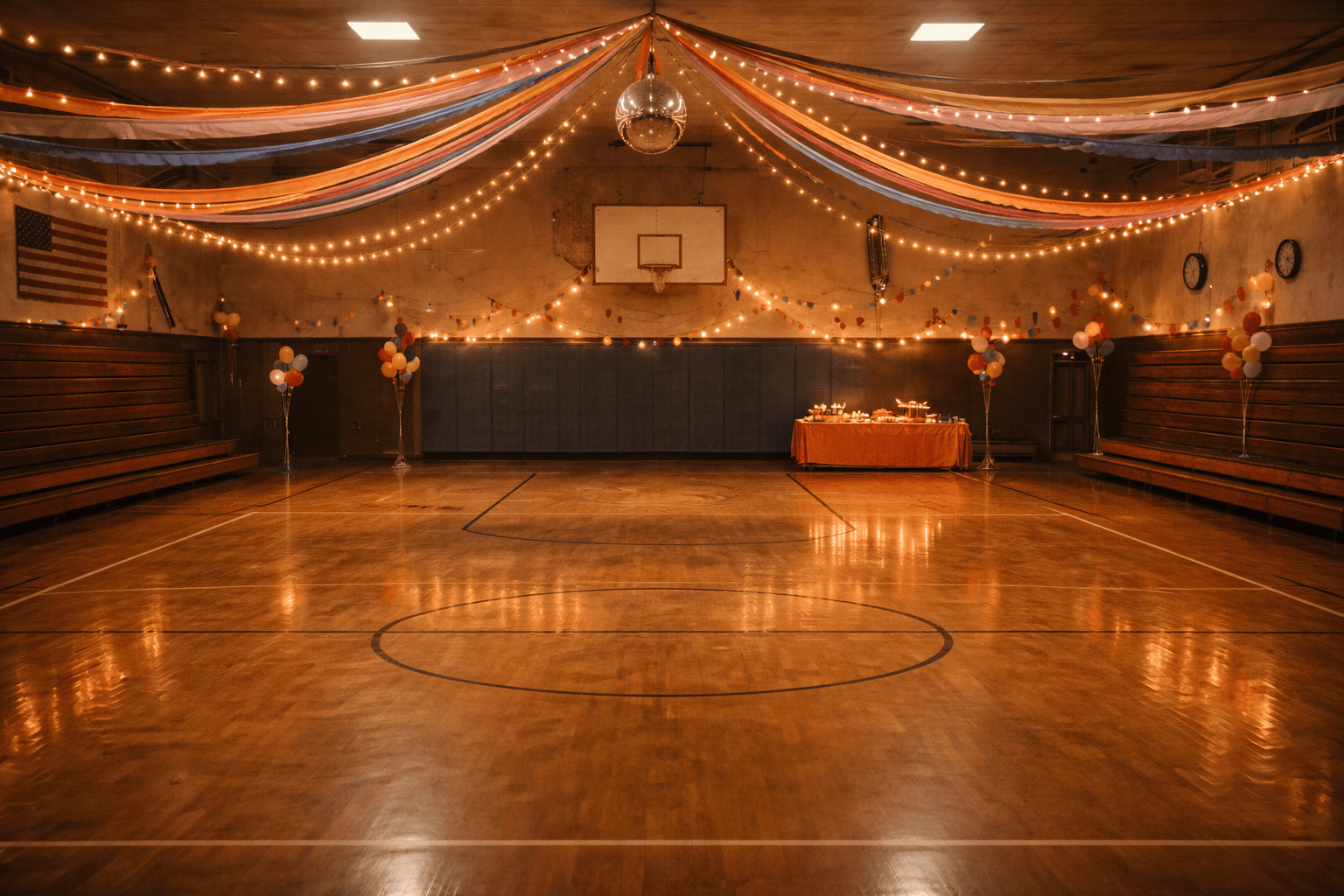
The dance was held in the gym at Washington Junior High. The same gym where we ran laps and endured dodgeball was suddenly dressed up with crepe paper and dim lighting. There were snacks laid out in the kitchen, which felt incredibly sophisticated at the time. Romance, or at least the junior-high version of it, hung in the air.

I should admit right now that I was naïve and very much not a ladies’ man. I owned exactly one move, and it involved standing still while swaying slightly. Still, there was slow dancing. Careful, awkward, hands-placed-where-they-were-clearly-approved slow dancing. Maybe we almost cuddled. We weren’t as advanced as some of our classmates, who seemed to have learned these things from a secret manual the rest of us never received. But it felt nice. And at thirteen, nice was plenty.

When the evening ended, we headed home—five houses apart,bringing us closer to our respective front doors and farther from the gym floor. The next day, everything returned to normal. No declarations, no awkwardness, just school and life continuing on as if nothing monumental had happened.

Except, of course, something had.

Cara and I kept crossing paths. We went through four years of high school together and then a couple of years of college. Somewhere along the way, we developed a close and somewhat unique friendship. It was Cara who decided that if we were going to be business majors, we really needed to learn how to drink martinis, even though neither of us actually liked them yet. And it was Cara who almost convinced me to go skinny-dipping in her apartment pool at two in the morning.

Almost.

I was still cautious, even when pretending not to be.

Eventually, life did what it always does. We drifted. Time passed. Careers, moves, and responsibilities filled in the space between memories. But every once in a while, without warning, I’m back in that gym—slow dancing, swaying awkwardly, doing my best with what little confidence I had.

I lost track of Cara years ago. But I never lost track of what that night taught me: that first dates don’t have to be impressive to be important, and sometimes the smallest moments—five houses, one dance, a night that ended too soon—stay with you the longest.
Goddard Motors

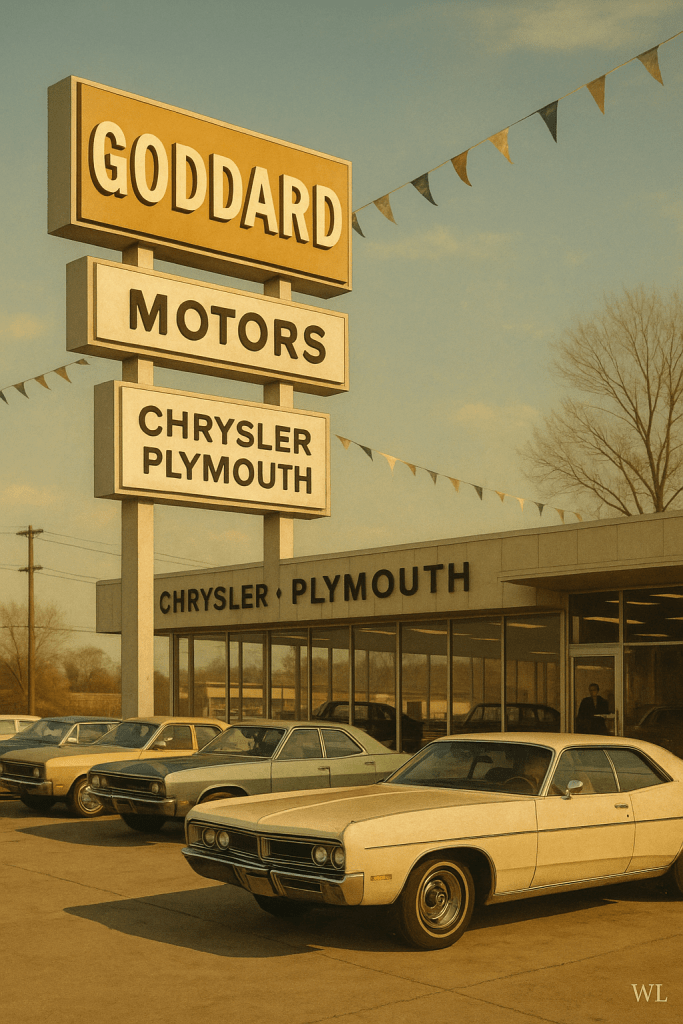
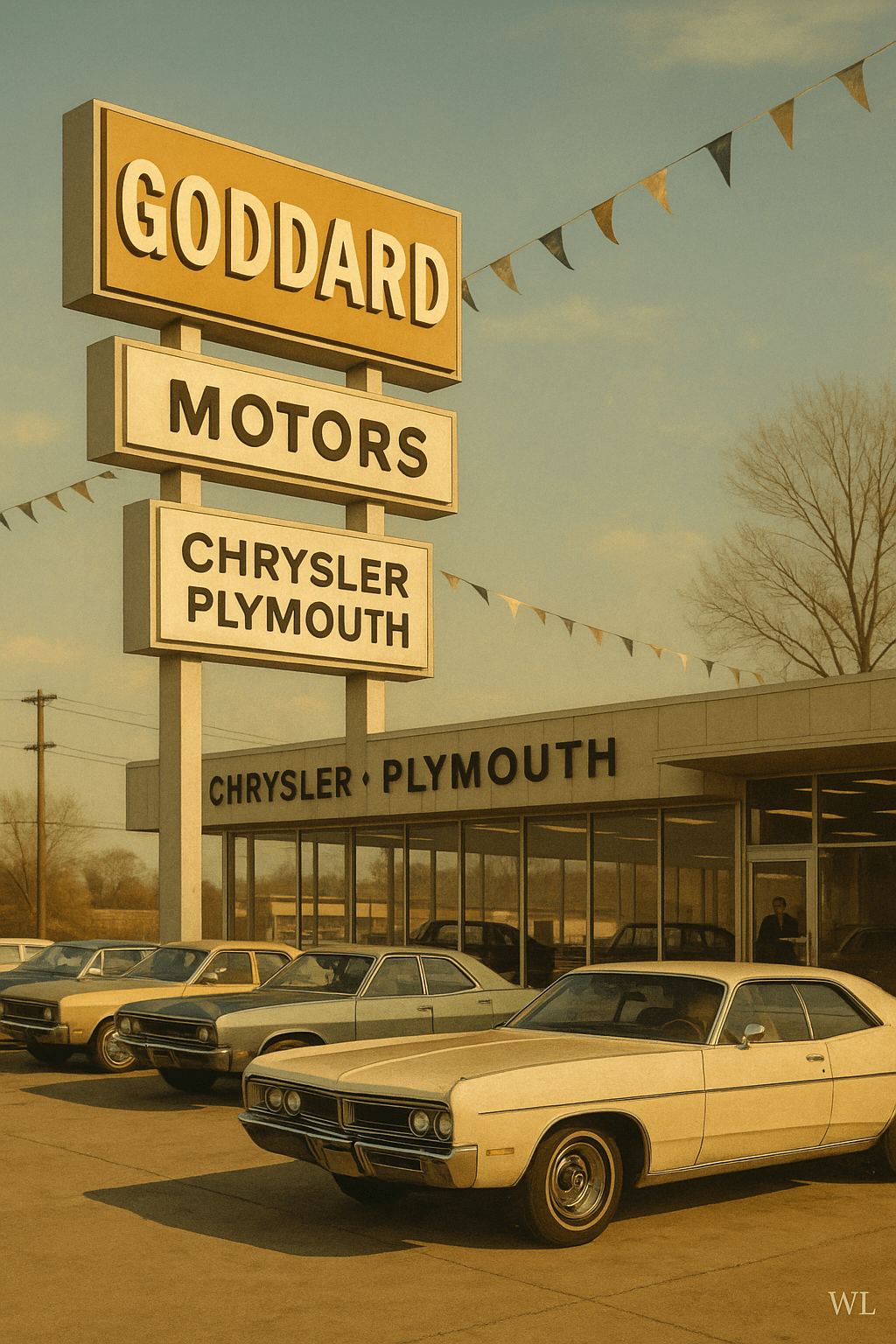
When I was a kid growing up in  St. Louis County, few places held more magic for me than Goddard Motors, the Chrysler-Plymouth dealership where my dad worked. It sat just south of the old Northland Shopping Center on West Florissant Road, that bustling landmark of the late 1960s and early ’70s, when Detroit steel gleamed on every corner and a new car was something families truly celebrated.

Goddard Motors was a wonderland of chrome and color. The lot stretched wide and bright, filled with rows of freshly waxed cars—Plymouth Furys and the sleek new Satellite Sebring Plus models. I still remember stepping through the showroom doors and being hit by that unmistakable new-car smell—a mix of vinyl, polish, and possibility. It was as intoxicating to me as any perfume could be.

My dad was the assistant leasing manager, a title that seemed impossibly important to my young ears. Leasing was still a new concept in those days, and I remember him explaining it to customers with patience and pride. To me, though, it wasn’t about business—it was about belonging. On Saturdays, I was at Goddard Motors, sponge in hand, helping wash the rental cars.

Those mornings were pure joy. The hum of hoses, the slap of chamois cloths, and the sight of sunlight glinting off a freshly washed hood felt like a ritual. Sometimes my dad would toss me the keys and let me move a car across the lot—an enormous thrill for a kid about to get his driver’s license. I can still picture the Cordoba with its fine Corinthian leather, its rich interior glowing like a living room on wheels.

And then there were the men who worked there—Rich, Skip, Norm, and Bill—each with their own sense of humor and stories to tell. They treated me like one of the gang, teasing me good-naturedly, teaching me how to dry a fender properly or check for streaks on a windshield. For a shy kid, that sense of inclusion meant everything.

But the car business, like the country itself, began to change. The Arab Oil Embargo hit in the early 1970s, and suddenly gas lines, mileage concerns, and shifting consumer tastes reshaped everything. The big, powerful Chryslers gave way to smaller imports. Goddard Motors eventually moved, then was bought out, fading from the map like so many neighborhood landmarks of that era.

My dad left the dealership long before that, trading the uncertainty of car sales for the stability of county government work. Still, I know those years at Goddard shaped both of us. They gave him pride in his craft—and gave me an early love for the smell of a showroom, the feel of a steering wheel, and the camaraderie of a good team.

Sometimes I think those Saturdays at Goddard Motors taught me more than I ever realized back then. I wasn’t just washing cars or tagging along with my dad—I was learning about pride in your work, loyalty among friends, and the quiet satisfaction of doing something well. When I look back now, I can still see him standing on that lot, a row of shiny Chryslers behind him and a smile that said he was right where he belonged. And maybe, in a small way, so was I.

Postscript:
All these years later, every time I catch that unmistakable new-car smell, I’m reminded of him—and of those early lessons that never really left me.

Wilfred

Wilfred Wollberg was born in St. Louis on May 9, 1902. To me, he was always something of a mystery—a man whose shadow passed in and out of family stories but never stayed long enough to truly take root. Around 1928, he married my grandmother, Selma Mueller. Having known them both, I’ve often thought of them as opposites that somehow worked, at least for a while. Wilfred was showier, outgoing, and a bit of a charmer; Grandma was quieter, subtler, and content to live life without the fanfare.

Their first daughter, my Aunt Elaine, was born in 1931, and my mom, Janice, followed in 1937. Not long after, my mom became seriously ill with appendicitis as an infant, and it was during that hospital stay that everything changed. The story goes that Wilfred, always the ladies’ man, took up with one of the nurses—a woman named Dema. Somehow, she convinced him that she was pregnant, and in 1938, he divorced my grandmother.

That sort of thing just didn’t happen back then. Divorce carried a deep shame, especially for a woman. Grandma had what they called a “nervous breakdown” and was hospitalized for a time. She even underwent shock treatments, which were common then but sound so cruel now. She recovered, at least outwardly, but I don’t think she was ever truly the same.

She stayed with her parents and my Uncle Ollie in South St. Louis, while Wilfred went north—first to the city, then to North County—with Dema, who, it turned out, was not pregnant after all. He saw my mom and Aunt Elaine occasionally, though he was out of their lives more than he was in them.

Aunt Elaine once told me that when they were little, Wilfred gave them each a quarter for allowance—then crept into their room later that night to take it back. That story somehow says more about him than any photograph ever could.

He reappeared briefly when Aunt Elaine and Uncle Dale were getting married. He was supposed to give her away but balked at paying part of the wedding costs. Then, years later, when I was born, he surfaced again. Maybe the idea of being a grandpa softened him. I remember him as a good cook, fun to be around but not a healthy man. He seemed older than his years, worn out by a life of choices that didn’t quite turn out as planned.

One night in April 1974, my mom got a call from Uncle Herbert. Wilfred and Dema had been in a car accident. Having lived on nitroglycerin pills the last ten years of his life, Wilfred finally died of a heart attack in the process. I’ll never forget telling Grandma Wollberg that he was gone. After everything—after all the hurt, the betrayal, and the years apart—she cried.

I used to visit Dema now and then after Wilfred’s death, up until she passed away in 1982. Looking back, I’m not sure why I did. Maybe I wanted to understand him better—or maybe I was just visiting a final link to a part of our family that had disappeared long before I was born. I even stopped by his ashes in the mausoleum a few times.

Now, all of it feels like a distant memory—faces that have faded with time, stories told and then retold. But Wilfred’s story, like so many, still lingers a bit.

Glenn

When I was growing up, Glenn and Mary and their kids, Leslie and Jeffrey, were part of many of our family gatherings. Glenn was my Uncle Ollie’s son—technically my mom’s cousin—but to me, he was simply family. They were the closest thing I had to cousins on that side, and they were regular fixtures in my childhood. We saw them at birthdays and those casual weekend visits that always seemed to end up at my grandmother’s house. They were part of the routine of family life—familiar, comfortable, always around.

My grandmother and Uncle Ollie lived together, and Glenn was a regular visitor at the house on Dover Place. Glenn’s mother had passed away when he was very young, and my grandmother helped raise him. In many ways, she filled that role of mother in his life, giving him stability and love when he needed it most.

Then Uncle Ollie died in 1970, and something shifted. Almost overnight, Glenn and his family just stopped showing up. They didn’t come to family functions, didn’t visit Grandma’s house anymore, didn’t call. It wasn’t gradual—it was sudden. They were gone.

At first, I waited for them to come back, thinking maybe it was just a rough patch or a busy time. But they never did. Years went by, and they simply disappeared from our lives. No explanation. No falling out that anyone ever spoke of. Just silence.

As a kid, that was hard to understand. I couldn’t wrap my head around how people who had been so close could just vanish like that. It felt like something had broken, but nobody wanted to talk about it. As I’ve gotten older, I’ve come to see that families are complicated. People hold grudges, feel slighted, get tired, or drift into their own worlds. But even understanding that doesn’t make it easier.

When my grandmother died in December of 1980, Glenn was the only one who showed up. Not Mary, not Leslie, not Jeffrey. Just Glenn—standing there quietly, saying very little. It was painful to watch, because this was the woman who had raised him after his mother died. She had loved him like her own son. And there he was, unable—or unwilling—to find the words.

That moment stuck with me. It said something about the way people can disconnect, even from those who once gave them everything. It also taught me something I didn’t realize at the time: family isn’t guaranteed. Just because you share blood doesn’t mean you share loyalty, or love, or the desire to stay connected.

I’ve carried some anger about that through the years. Maybe it’s because I can’t stand to see someone turn their back on the people who stood by them. Like my Grandma Wollberg being there for him and he turned his back on her. She deserved more. She deserved better. It left a mark.

When I think about it now, Glenn and Mary are both gone. Their children, Leslie and Jeffrey, have long since gone their own ways, far removed from the family gatherings we once shared. Time has a way of carrying people off quietly, leaving behind only the memories of who they were and how things once felt.

Sometimes, even family can disappoint you in ways that never quite fade. And maybe that’s why I still think about them. Because even when people disappear from your life, the memories don’t.

And maybe that’s part of what shapes us as human beings—the absences as much as the presence. The people who walk away remind us to hold tighter to the ones who stay.

South County Mall Days

Where Saturdays, Shoes, and Shopping Became a Way of Life

When I was growing up, South County Mall was practically a second home. Back then, it was the place to be in St. Louis. The anchor stores were Famous-Barr and JCPenney, and for my mom, that was all she needed. Shopping was her hobby, and South County was her playground. Whether we were buying school clothes, gifts, or just “running by the mall,” we always seemed to end up there.

When I got old enough to work, it only made sense that I’d land a job there too. I started out part-time at Zimmerman’s Children’s Shoes—a cheerful little store tucked along one of the main corridors. We sold kids’ shoes, mostly Stride Rite, and before long I went from helping after school to managing the place full-time. It was my first real job, and I loved it.

The mall became my world. I knew nearly everyone—the other store clerks, the maintenance guys, the regular shoppers who came in for back-to-school shoes or just to chat. I ate at all the restaurants, but Blue Stove, right across the mall from us, was my favorite. I can still picture grabbing lunch there on busy Saturdays, the hum of conversation blending with the smell of cinnamon pretzels and new leather from the shoe store.

In the early 1980s, South County Mall expanded, adding a bright new two-story wing with Dillard’s at the end. For those of us who worked there, it felt like being part of something big. The new escalators gleamed, and the mall buzzed with excitement. These were the golden days for shopping malls—before online stores and empty corridors—when Saturday afternoons were packed with families, music piped through the speakers, and everyone carried a bag from somewhere.

Eventually, my work at Zimmerman’s opened another door. I became an outside sales rep for Stride Rite, traveling and visiting stores across the region. In 1985, I left the mall—and St. Louis—for new adventures. But even now, I look back fondly on those years.

The cemetery where my parents are buried is very close by, and you can actually see the mall in the distance. I remember my sister commenting when we buried my mother that she would be very happy there—because she’d be by the mall. Somehow, that thought brings me a smile even now.

South County Mall wasn’t just a job or a shopping center—it was a community. A place where people met up, where kids grew up, and where I took my first steps into adulthood, one pair of shoes at a time.

Christmas 1969


I didn’t realize it at the time, but Christmas of 1969 would be the last year my family—just as I knew it—would all be together under one roof. I was too young to recognize how quickly life changes, how even the most ordinary moments can quietly become the ones we remember forever.

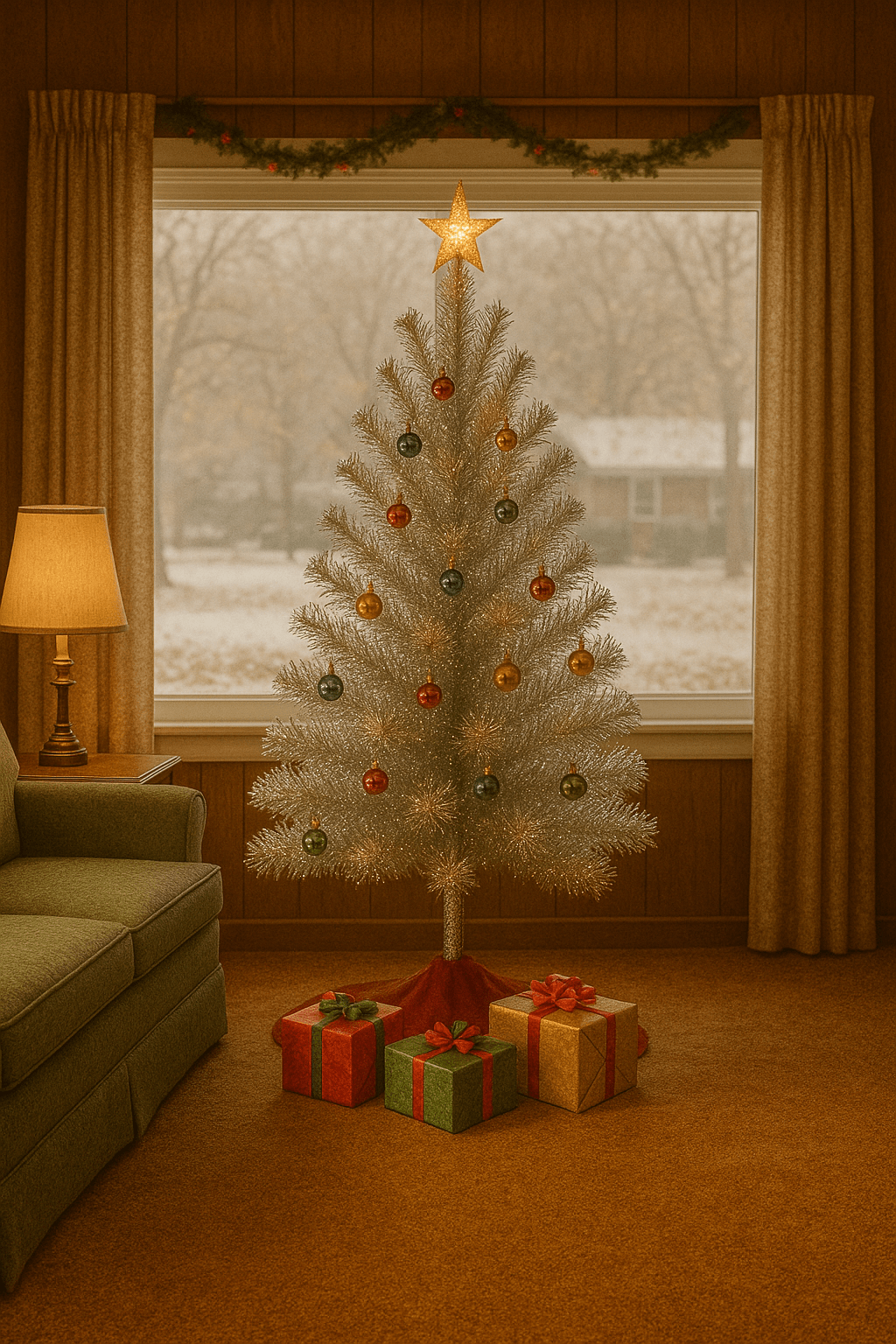
That morning, the house was filled with the warm, familiar smells of Christmas. Mom was in the kitchen, busy with her famous turkey and stuffing. The clatter of pans and the sound of the oven door opening and closing were the soundtrack of the  holiday. My sister and I were still caught up in the excitement of the morning, playing with the toys Santa had delivered the night before. The living room, glowing with soft light and the shimmer of our silver Christmas tree, felt almost magical.

I remember hearing the crunch of tires in the driveway and peeking out the window just in time to see Uncle Ollie carefully steering his big sedan into place. He always drove with such purpose. In the car with him were Grandma Lubker, Grandma Wollberg, and Aunt Myrtle—each bundled in coats and scarves, each carrying the warmth of their own traditions. They made their way into the living room, greeted by hugs, laughter, and the smell of Mom’s cooking that seemed to wrap around everyone like a blanket.

Aunt Elaine and Uncle Dale arrived a bit later, bringing even more noise, conversation, and the kind of laughter that could fill a house. I remember the grown-ups settling into the living room, their voices overlapping as stories and jokes passed back and forth. I can still picture Grandma Wollberg smiling quietly from her chair, taking it all in.

When dinner was finally ready, we gathered around the table, plates piled high with turkey, stuffing, mashed potatoes, and all the sides Mom had so carefully prepared. The clinking of silverware and the steady hum of conversation filled the room. For dessert came my favorite—pumpkin pie, rich and spiced just right. It was one of those perfect family moments that, at the time, just felt like another Christmas. We didn’t yet understand how precious it really was.

Because by the next Christmas, Uncle Ollie was gone. And within a few years, Grandma Lubker would be too. Those changes came quietly, as life often does, and suddenly that day in 1969 became something more than a holiday memory. It became a snapshot of a time when everyone I loved was still there—when the chairs were all full, and the laughter still echoed through the house.

Looking back now, I realize how fleeting those moments were. You never truly know when you’re living through the last time things will be just as they are. Christmas 1969 was the end of one chapter and the beginning of another, though none of us knew it then. And that, perhaps, is what makes it so special.

Melba and Lorraine


Families have a way of branching out in all directions, and sometimes those branches lead to people who leave quiet but lasting impressions. For me, two such people were Grandma Wollberg’s cousins, Melba and Lorraine. They were related to her on her mother’s side. My great-grandmother, Caroline Mueller (née Pieper), and their father, Uncle Henry, were sister and brother. That made Melba and Lorraine my grandma’s first cousins, though they were nearly twenty years younger than she was.

Neither Melba nor Lorraine ever married, and and they always took care of one another. They weren’t always present at every holiday or big gathering, but they were steady visitors, the kind who seemed to drift in and out with a kind word, a story, or a laugh that lingered after they left. I was always glad to see them. They felt like an extension of Grandma herself—two pieces of a family line that stretched back through the Piepers and out into the past.

Melba was the quieter of the two. She had struggled with her health for most of her life and carried herself with a gentleness that came from endurance. There was something soft-spoken and gracious about her. She never demanded attention but always seemed grateful for the company and conversation around her. Sadly, she passed away in 1984 at only sixty-four—far too soon, but not before leaving behind the memory of someone who met life’s challenges with quiet dignity.

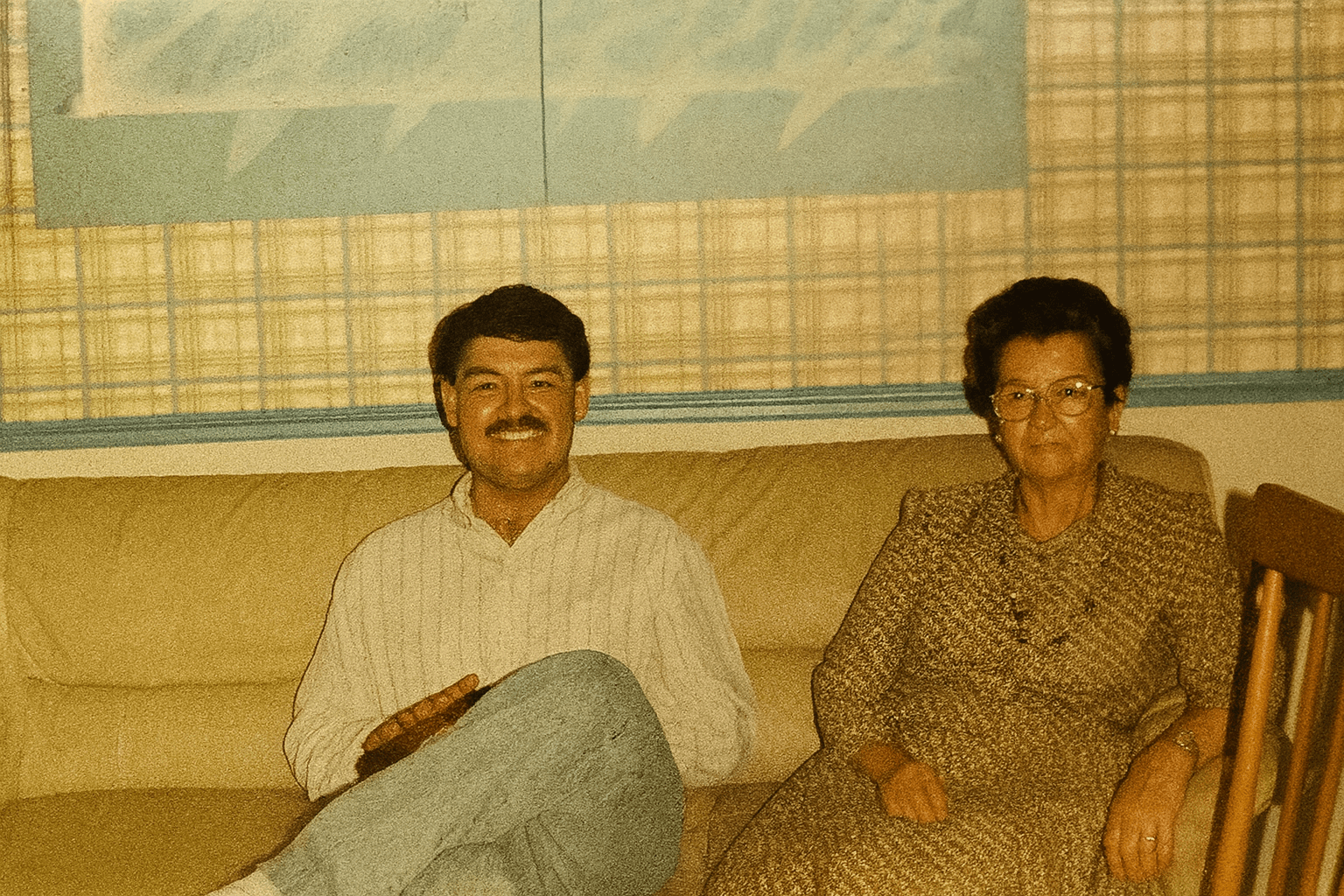
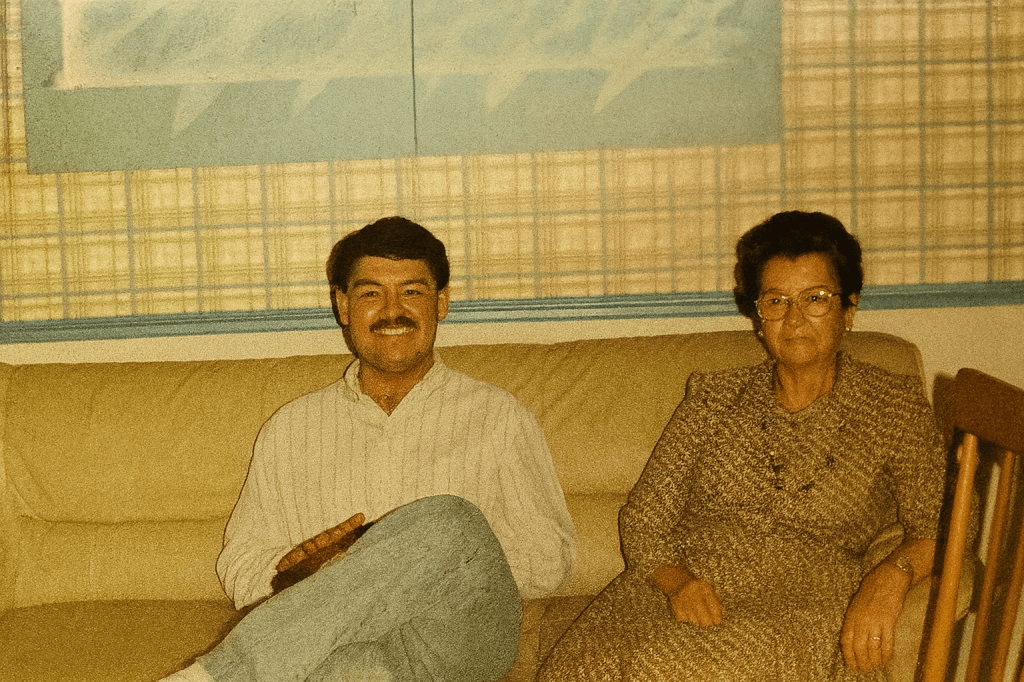
Lorraine, on the other hand, was full of energy. She had a spark that made her fun to be around—the kind of person you might call “the cool older cousin.” She had a liveliness that could brighten a room and a way of keeping in touch that made you feel remembered. Where Melba’s presence was calm and steady, Lorraine’s was quick and animated, always ready with a story or a laugh. She lived long enough to see my sons born and was there for the family celebration for my oldest son, Andrew (the picture is of she and me at the ‘Meet Andrew Party’ as his Aunt Carole named it). I’ll always be grateful for that overlap of generations. Lorraine passed away in 2004 at the age of eighty-one, still very much the vibrant spirit I’d always known.

One of my most vivid memories of Lorraine came at Grandma Wollberg’s funeral. I was standing by the casket when she came up beside me. She looked at Grandma for a long moment, then quietly said, “We both lost a good friend.” It was such a simple statement, but it said everything about the closeness between them—not just as cousins, but as lifelong companions who had shared family history, laughter, and love across decades.

Melba and Lorraine were the only members of my great-grandmother’s family that I really knew. Through them, I caught a glimpse of that side of our lineage—the Piepers—and how those roots carried through to my grandma and, in a way, to me. They may have lived quieter lives, but their kindness, loyalty, and presence stitched another thread into the fabric of who we are. I’m grateful to have known them both.

Dressel School

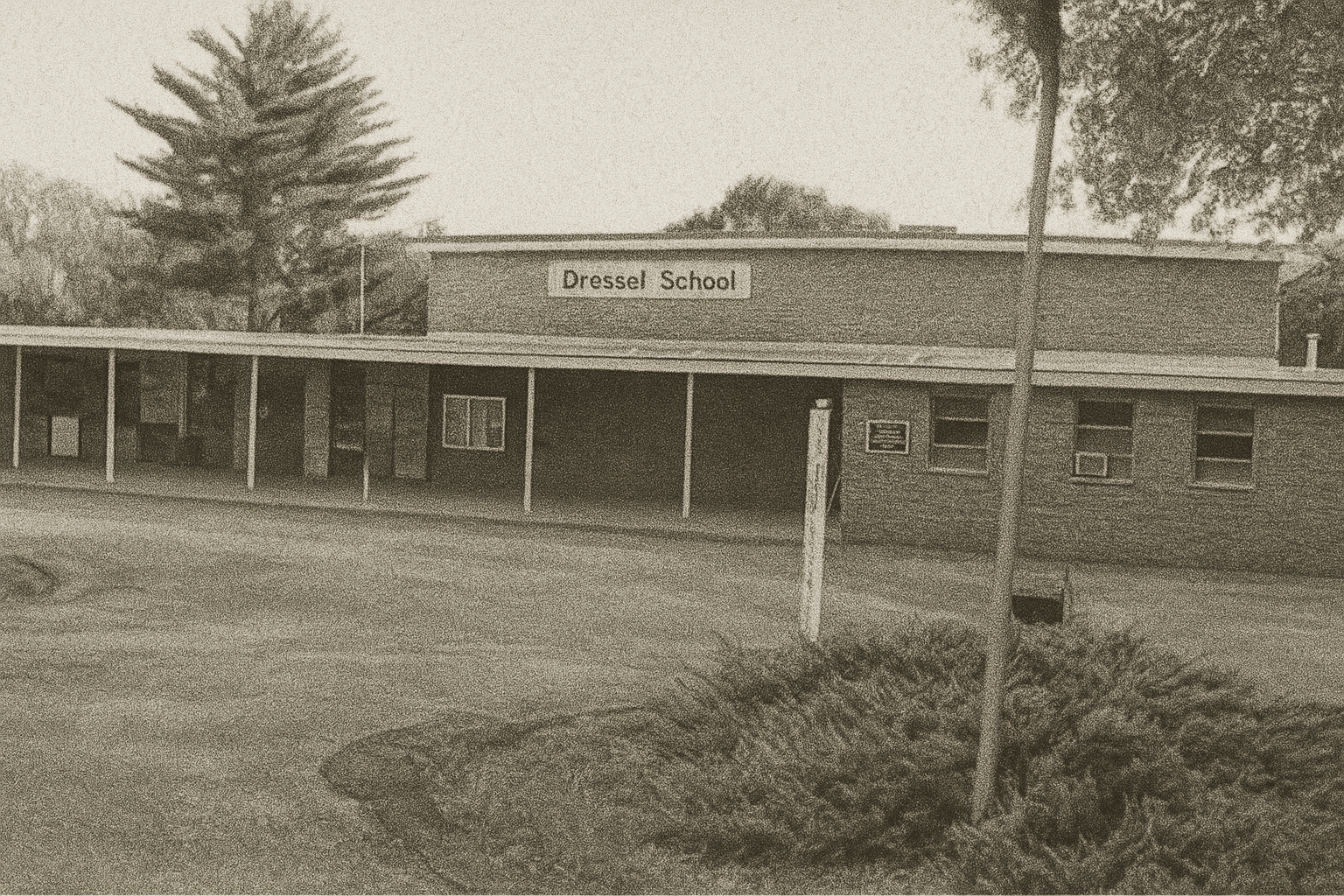
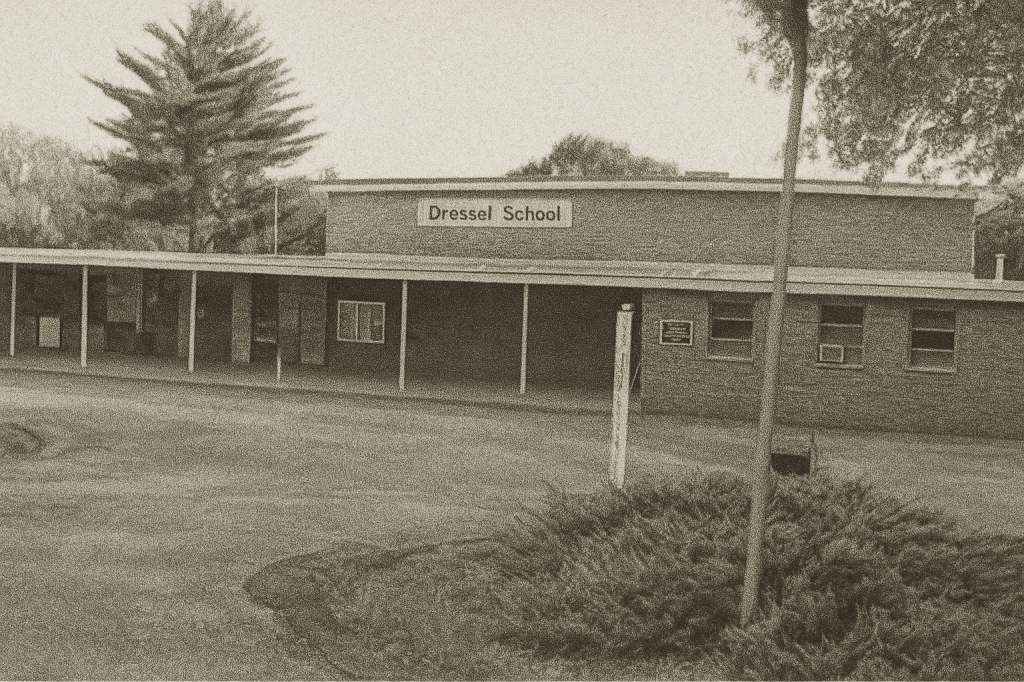
I spent my early school years at John M. Dressel School, which was part of the Lindbergh School District back then. From kindergarten through fifth grade, it was the center of my world — a place that shaped many of my earliest friendships and memories.

Each grade had three classrooms, and to a kid, that felt enormous. We had art and gym, the two “special” classes that broke up our daily routine. I loved art class — the smell of crayons and tempera paint, the freedom to draw whatever came to mind. Gym class, on the other hand, was another story. I was not what anyone would call athletic. I couldn’t dribble a basketball to save my life, and a softball might as well have been a guided missile headed for embarrassment. Still, I tried. And the funny thing is, my best friend Rick — whom I met right there at Dressel — couldn’t dribble a basketball either. Maybe that’s what made us such good friends.

My mom was one of those parents who was always around the school. She volunteered as a room mother and was there for every holiday party and classroom celebration. Looking back, it’s a comforting thought — knowing that she was part of those moments too.

I was also in Cub Scouts for a while. We held our pack meetings in the gym, with Mr. Sadorf as our Scout leader. I learned how to tie knots and follow directions, but to be honest, the scouting life wasn’t quite my thing. Still, it added a few lessons to my childhood toolbelt.

Every spring, Dressel held a school picnic, often at a nearby park along with other schools. There were rides and games that, by today’s standards, would probably never pass inspection. But at the time, they seemed thrilling — wobbly Ferris wheels and all.

I finished fifth grade in the spring of 1972, right before our family moved. Dressel School itself has since changed — it’s no longer part of the Lindbergh School District — but it remains an important chapter in my life. When I drive past, I can almost hear the echo of the bell and the laughter of kids running to recess, including one boy with two left feet who was just trying his best.

Another piece of the puzzle that made me who I am.

The Green Phone

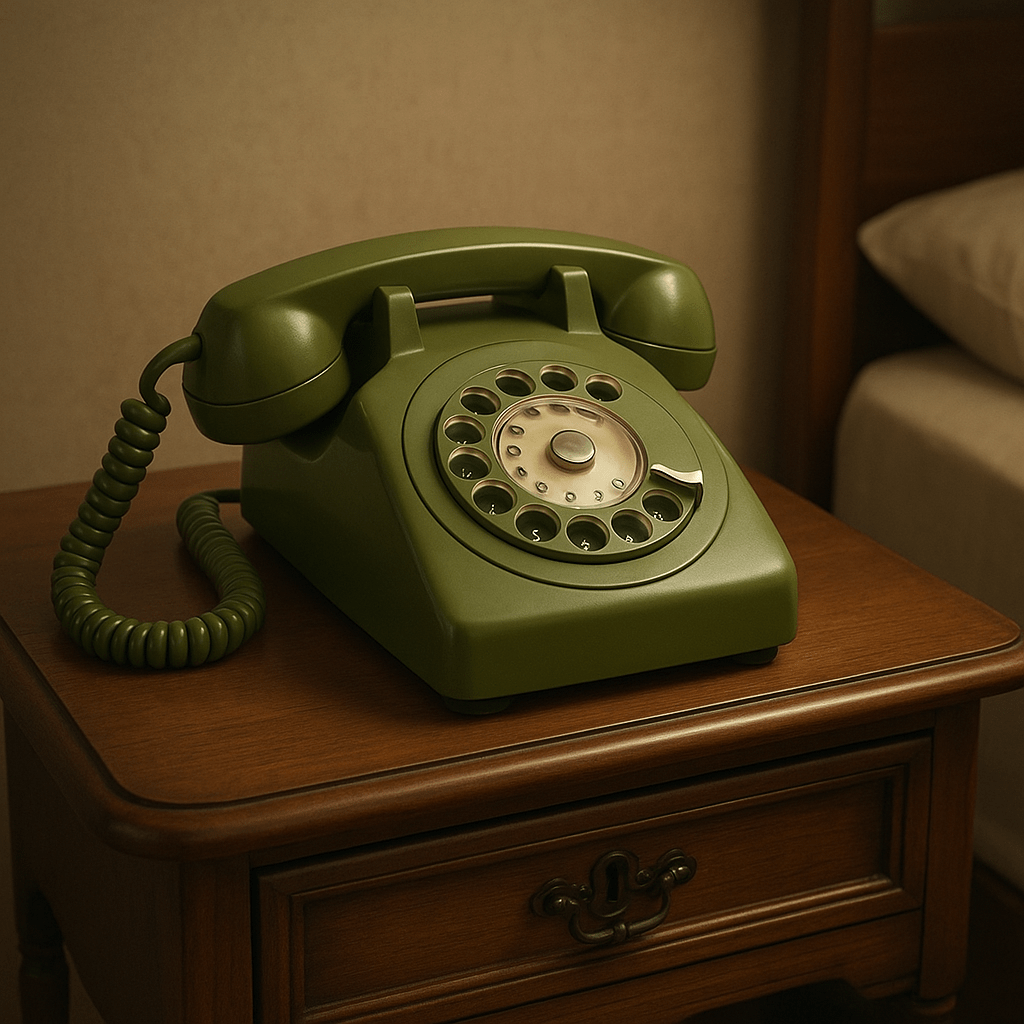
There was only one phone in our house on Jackie Lane—a green rotary-dial model that sat on the nightstand in my parents’ bedroom. It was heavy and solid, with a long, coiled cord that always seemed tangled no matter how carefully we tried to unwind it. That phone was the family’s lifeline to the outside world, and every evening my sister and I took turns using it to call our grandmothers.

We’d tell them about our day—what we’d learned at school, what Mom made for dinner, which neighborhood kid had gotten in trouble this time. It was our nightly check-in, our small way of making sure they were okay. But sometimes it wasn’t easy to reach them. Both of my grandmothers had what was called a “party line.” That meant they shared their phone line with another household, and if that other person was chatting, our call wouldn’t go through. You’d pick up the receiver and hear someone else’s conversation, and all you could do was hang up and try again later. Some nights it took half a dozen tries before we heard that satisfying click and the familiar “Hello?” on the other end.

Since it was the only phone in the house, that green rotary handled everything—from calls to our friends to the occasional important message. There was no such thing as privacy; if you wanted to talk to someone from school, you did it sitting on your parents’ bed with everyone walking in and out of the room. And of course, there was no caller ID back then. When it rang, you never knew who would be on the other end.

Sometimes it was my mother’s cousin, Ina—always mentioned with her husband, “Earl and Ina,” as though they were one person. They never had children, but Ina had a fondness for the phone—and for drinking. Once she got you talking, you were stuck. You couldn’t politely excuse yourself, because she wasn’t about to hang up. After a while, I became the unofficial “caller ID.” If the phone rang, I was sent to answer first to make sure it wasn’t Ina.

That same phone carried laughter, gossip, and the news of everyday life—but also sorrow. I still remember the day my mom got the call that Uncle Ollie had died.

Today, phones fit in our pockets and connect us instantly to anyone, anywhere. But that green rotary on the nightstand was more than just a piece of plastic and wire—it was connection, patience, and the sound of family. I can still picture it sitting there, waiting for the next call, as if it knew that every ring carried a story worth remembering.

Dover Place


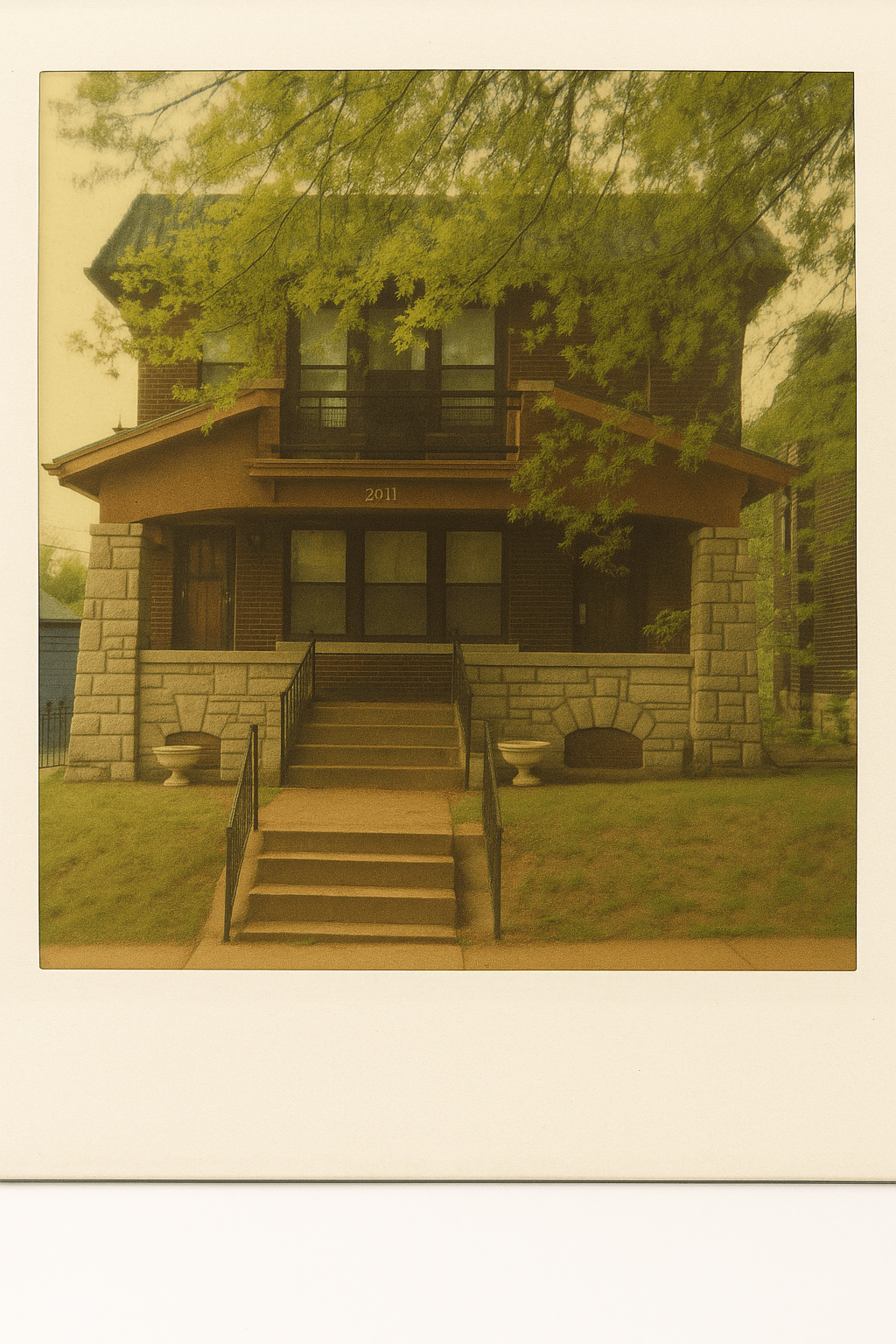
The house my mom and Aunt Elaine grew up in—and the one my Grandma Wollberg still called home when I was a kid—stood proudly at the corner of Grand Avenue and Dover Place in South St. Louis. It was a sprawling two-family flat, the kind of sturdy brick home the city is known for, sitting right next to the alley on Dover. To me, it was more than just a building. It was a second home, full of the smells, sounds, and comforts that made childhood feel safe and steady.

What I remember first is that porch. It stretched wide across the front, shaded in summer, perfect for waiting on family or neighbors to stop by. From that porch, Grandma would wave to anyone who passed—whether she knew them or not. When company came, the porch filled with voices and laughter that seemed to spill right out onto the sidewalk.

Along the side yard, Grandma’s rose bushes bloomed in neat rows of pinks and reds. She tended to them faithfully, clipping the faded petals with the same patience she showed in the kitchen. Those roses were her pride, and to this day, when I catch that familiar sweet scent in summer, I think of her yard on Dover Place.

Inside, the house was big but never felt cold. The kind of warmth that radiators used to give off in winter is hard to describe—dry, steady, and somehow comforting. You could hear them hiss and tick quietly as the house settled. The upstairs apartment was almost always empty, which made it our secret playground. My sister and I would play up there, our voices echoing through the empty rooms.

The heart of the house was always the kitchen. That’s where Grandma made her famous fried chicken—crispy on the outside, juicy on the inside, and always cooked in her electric skillet. I can still see her standing there, apron tied at the waist, while the smell filled the whole flat.

And then there was the living room—the place where I sat beside her on the couch watching Wrestling at the Chase on Saturday evenings. The curtains would be drawn just enough to block the glare, and she’d react to every body slam as if the wrestlers were right there in the room with us. Those nights were part of our ritual, a shared moment of excitement.

Down in the basement, an old furnace sat like a relic from another time, with a coal chute still attached from the days when fuel was delivered straight into the cellar. Everything about that house whispered history—from the creak of the floorboards to the scent of rose soap in the bathroom.

It might have been large by any standard, but to me, it always felt cozy. Maybe that’s because Grandma filled every corner with warmth—real, steady warmth that came from her presence, and the life she built there. Even today, when I drive down Grand and turn onto Dover, I still half-expect to see her standing on that big front porch, waving at me.

Some houses are just places we visit, but others stay with us long after we leave. Grandma’s house on Dover Place was more than brick and mortar—it was, on many days, the heartbeat of our family.