Uncle Joe


I wish I remembered more about my Uncle Joe. He passed away around 1967, and his was the first funeral I ever attended. I wasn’t especially close to him, but I remember being curious—maybe even fascinated—by everything that surrounded that strange, solemn event. In those days, funerals lasted longer than they do now. Two full days and nights of visitation, with friends and family filing in and out, offering hugs, prayers, and casseroles.

Uncle Joe was always a quiet man. I can still picture him walking down the street toward my grandmother’s house, his gait more of a shuffle than a stride, a cigar always tucked in the corner of his mouth. He never married, as far as I know. He lived simply, spoke softly, and never seemed in a hurry. Every so often he’d stop to talk to us kids—nothing long, just a word or two, enough to make us feel noticed.

At the funeral home, I remember standing close to my mother, trying to take everything in—the soft murmurs of adults, the scent of flowers so strong it nearly made me dizzy, and the quiet organ music floating through the air. I walked up to the casket and looked at him lying there, so still and peaceful, as if asleep. I didn’t understand death yet. I only knew that he looked the same as he always had, and that felt impossible.

I remember tugging at my mother’s sleeve and whispering that I saw him move. I was so sure of it. She gently told me I was mistaken, that it was only my imagination. But for years I held onto that memory—certain I’d seen life where there was none.

Looking back now, I realize that moment was my first encounter with the mystery of loss—the idea that someone could be here one day and gone the next, yet somehow still present in the folds of memory. I can still see Uncle Joe’s slow walk, still smell the faint trace of cigar smoke as he passed by on his way to Grandma’s house.

Maybe that’s how memory works—it lets us keep the quiet ones close, even long after their footsteps fade.

The Scar Beneath My Beard

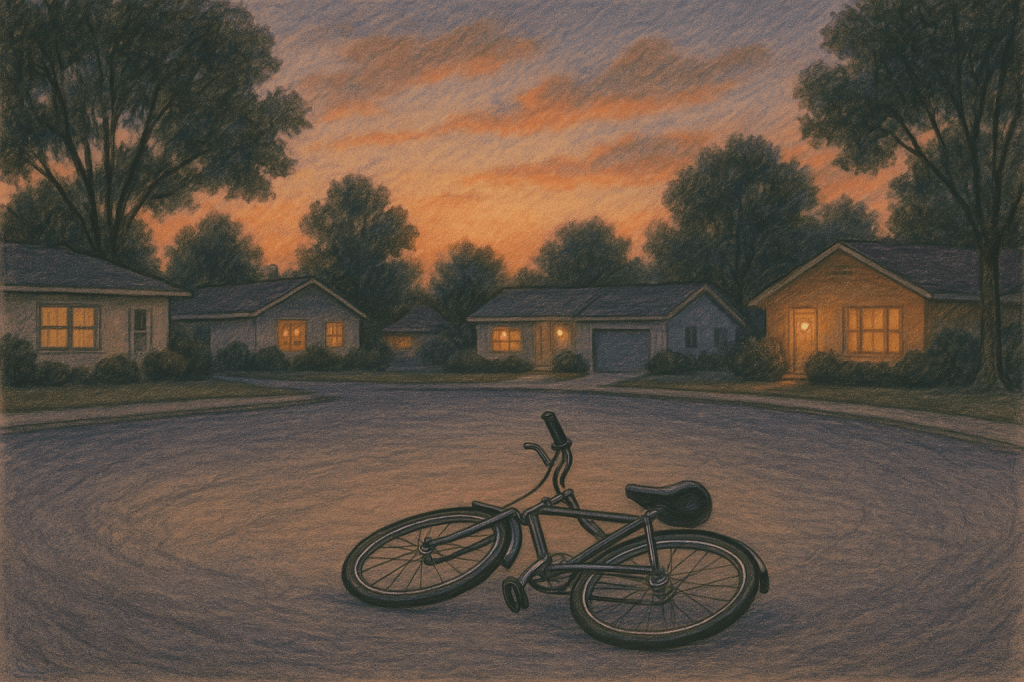
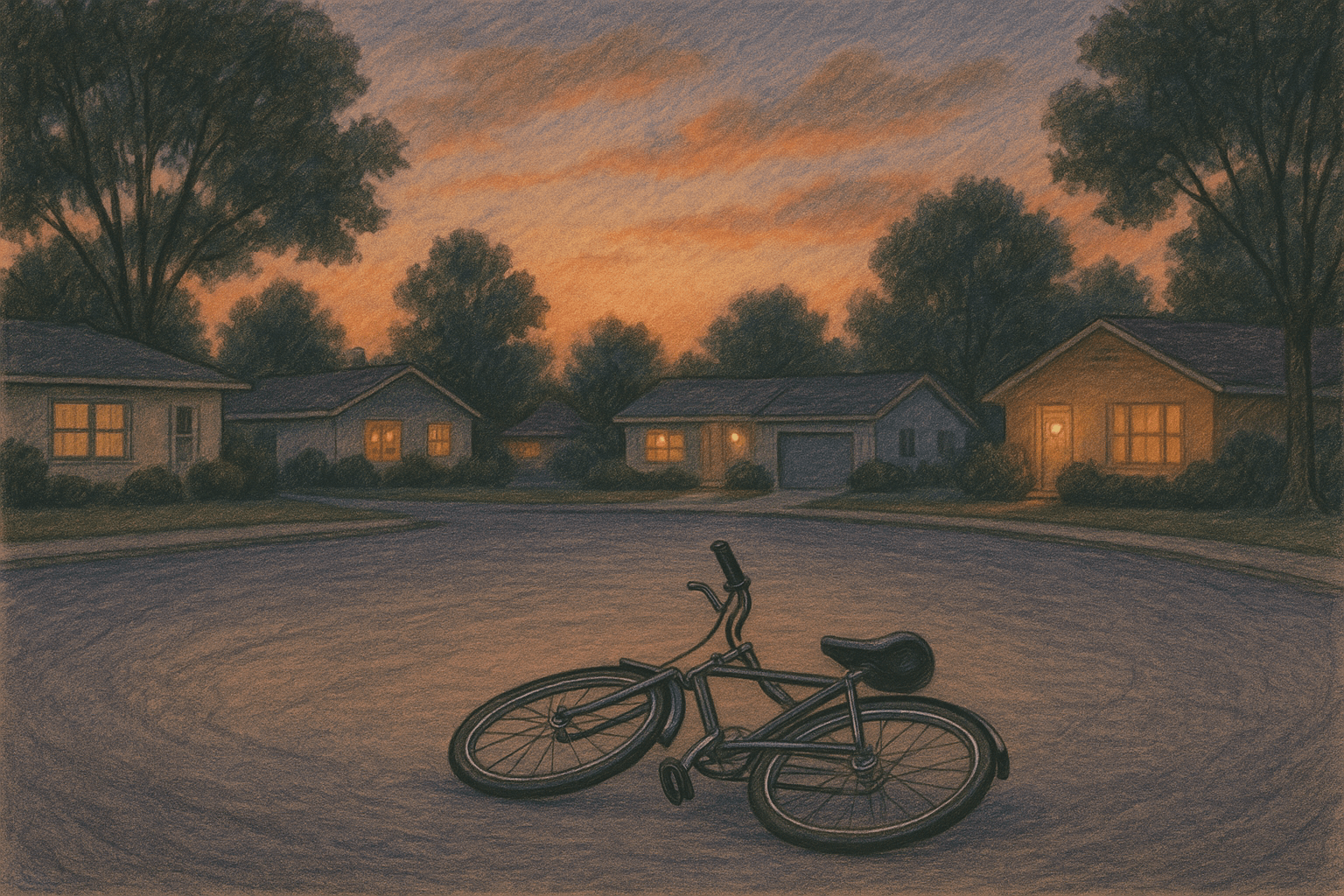
It was one of those sticky Saint Louis summer evenings in the late 1960s, the kind when the air felt thick with both humidity and the restless energy of childhood. My family was getting ready to visit some of my parents’ friends, the kind of outing that felt endlessly dull to a kid who’d rather be anywhere else. I had managed to get dressed early, and as soon as I was ready, I asked my mom if I could ride my bike for a little while before we left.

Her answer came quick and firm—“No. You’ll mess up your clothes.”

I tried again. Maybe I couldn’t ride my bike, but could I at least go hang out with the kids playing on the street behind our house? I promised I’d be back in fifteen minutes, no more. Mom hesitated, then relented. “Fifteen minutes,” she said, “and don’t get dirty.”

I sprinted out the door before she could change her mind. At the top of that street behind us, a whole pack of neighborhood kids had gathered—ten or more, shouting and laughing as the summer day began to fade. One boy, a little older than me, was showing off his new bicycle. It was shiny and sleek, with curved handlebars and thin tires that looked like they could fly. When he offered to let me take it for a ride, I didn’t think twice.

I started down the hill, the wind rushing through my hair, the world blurring into streaks of light and sound. The street was steeper than I’d remembered, and the bike felt different—too light, too fast. I tried to slow down, but the brakes felt foreign beneath my fingers. That’s when I hit it—a jagged hole in the pavement I hadn’t seen in the fading light.

The next thing I knew, I was airborne. I sailed over the handlebars and came down hard, face-first. Pain exploded through my chin. I screamed. The older kids came running. There was blood everywhere, bright against my dress shirt.

Instead of going to my parents’ friends’ house, we spent that night in the emergency room. A few hours later, I was patched up and sent home—humbled, sore, and a little wiser.

All these years later, the scar is still there, though hidden now beneath my beard. Every time I run a hand over it, I think of that summer night, of being young and impatient, and of learning—painfully—that sometimes Mom really does know best.

Every scar tells a story, and this one reminds me of the restless kid I once was—eager to prove myself, certain I knew better, and forever chasing the kind of freedom that only came with two wheels and a hill too steep to resist.

An Igloo


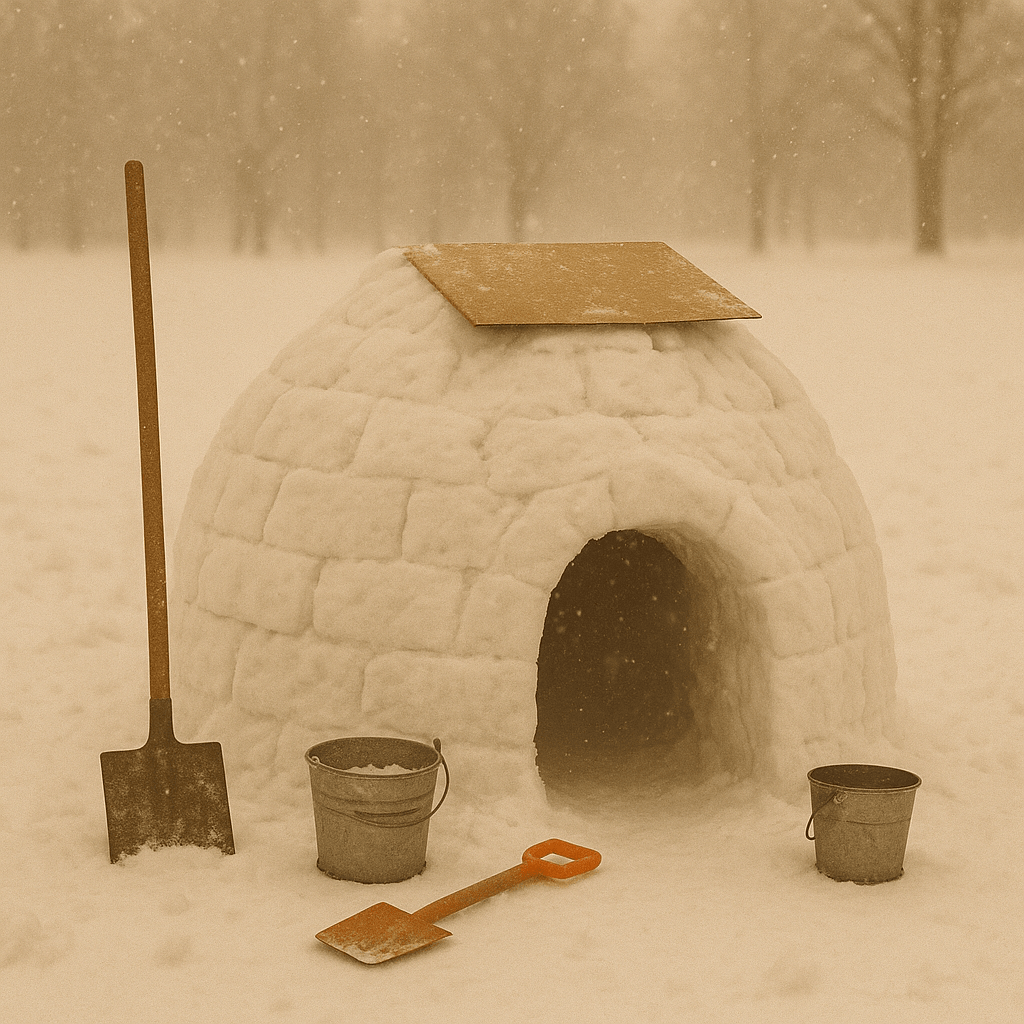
It snowed so much that winter we were able to build an igloo in our backyard. The year was 1970, and St. Louis seemed wrapped in silence beneath a deep, endless snowfall. For us kids, it was a wonderland. The  corners of our neighborhood transformed into places of adventure—yards became fortresses, snowbanks turned into slides, and the world felt both bigger and smaller under the hush of all that white.

In our backyard, the dream of an igloo took hold. At first it was just a pile of snow, but with each passing day more kids arrived, bundled in layers, cheeks red with cold and eyes bright with purpose. Ours was a neighborhood filled with large families—four or five kids spilling from every house—and when word spread about the igloo, everyone wanted to be part of it. They came with shovels, buckets, even kitchen pans, anything that might help. More than tools, though, they brought their excitement, and together we set about shaping something remarkable.

We carved tunnels, stacked blocks, and hollowed out a room that, for a time, became our own hidden world. Inside it was quiet, dim, and magical, the kind of place where secrets could be whispered and laughter carried softly against the snow walls. The roof proved too great a challenge, and in the end, we settled for a cardboard box stretched across the top. It might not have been true to form, but it was ours, and we thought it perfect.

What still amazes me is how long it stood. The igloo remained well into spring, long after the other snowbanks had melted away. Each time we checked on it, we felt a small surge of pride, as if the structure itself held the memory of our effort and our joy.

In the end, maybe that’s why the igloo stays with me after all these years. Even though it was never fully finished, it stood as a kind of shelter—fragile, improvised, but strong enough to hold our laughter and our togetherness. Igloos are built for protection against the cold, but ours did something more. It offered the kind of protection childhood so often does: a place where the world feels safe, where neighbors feel like family, and where a cardboard roof is enough to keep the wonder inside.

Every House Holds a Story


Growing up on Jackie Lane, we had many neighbors who left an impression on me, but none quite like Kenny Young. He lived in the house right next to ours, and though he never had children of his own, he always treated us kids with kindness and patience.

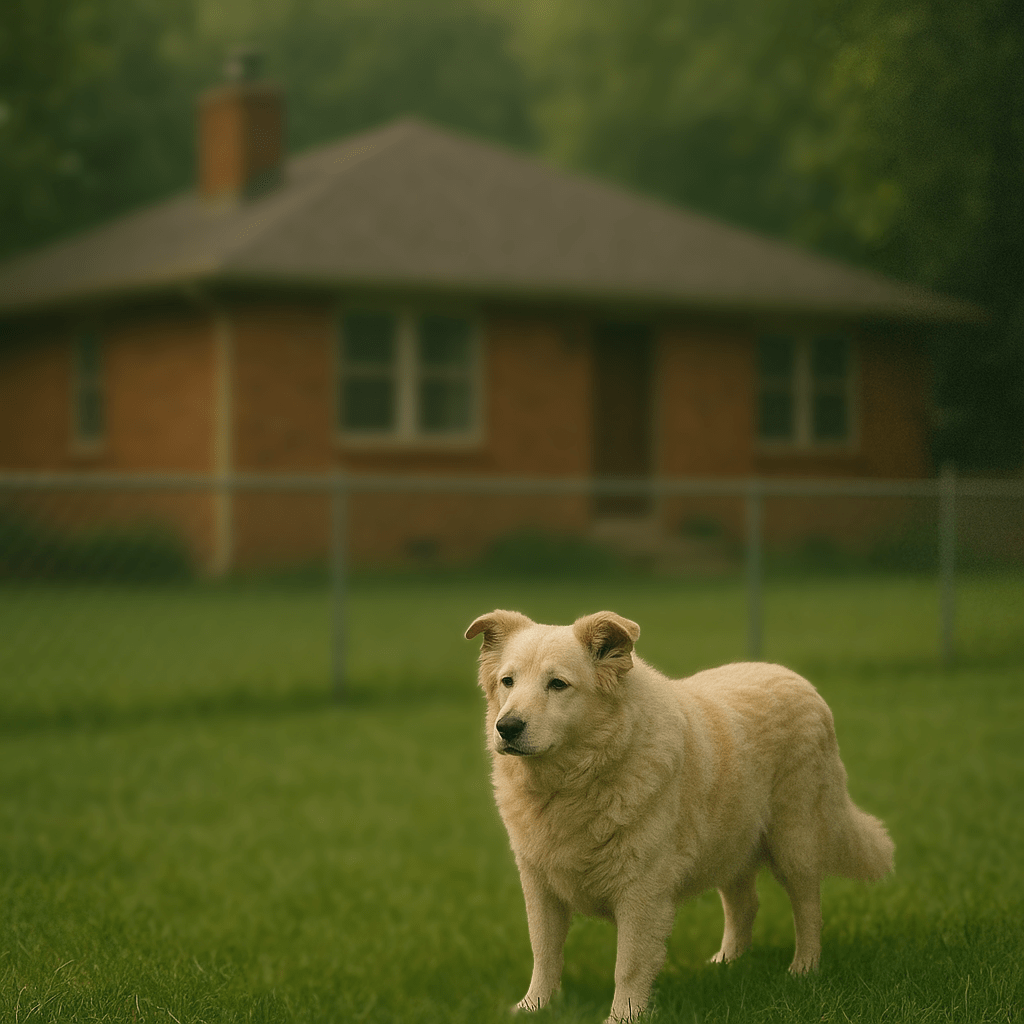
At one point, Kenny’s life changed suddenly when his wife, Joyce, left. She packed up and went her own way, taking one of their two dogs with her—a little poodle whose name I wish I could still remember. What she left behind was Tina, a white Collie mix with a gentle spirit. Kenny kept Tina in his fenced yard, and we kids loved to play with her whenever we got the chance. This was long before my family had our own dog, Pals, so Tina filled that space for a time. I can still picture her trotting across the yard, happy for any attention we gave her.

Kenny himself was just as welcoming. I was a talkative child—probably more talkative than most adults could tolerate. But Kenny never made me feel like a nuisance. He always listened, always seemed genuinely interested in whatever story or idea I had to share. That meant a lot to me. It wasn’t often that grown-ups treated kids as if their words mattered, but Kenny did.

One summer he bought a motorcycle, a real thrill for all of us kids who thought of such things as pure adventure. I’ll never forget the day he offered to take me for a ride down Jackie Lane. The wind in my face, the rumble of the bike, and the sense of being trusted—it all felt larger than life. To this day, that is the only time I have ever been on a motorcycle. That ride stands out as one of those simple, magical childhood memories.

Sadly, after we moved away, I learned that he had died. His house eventually belonged to someone else, and his presence became just another memory tied to that little stretch of street. But for me, Kenny was more than a neighbor. He was a reminder that kindness matters, that listening can mean as much as speaking, and that even small gestures—a ride on a motorcycle, a patient ear—can stay with someone for a lifetime.

In my memories of Jackie Lane, where every house seemed to hold a story, Kenny’s will always be one of quiet kindness—woven into the fabric of my childhood, as much a part of that street as the trees and the laughter of kids playing outside.

Saint Johns

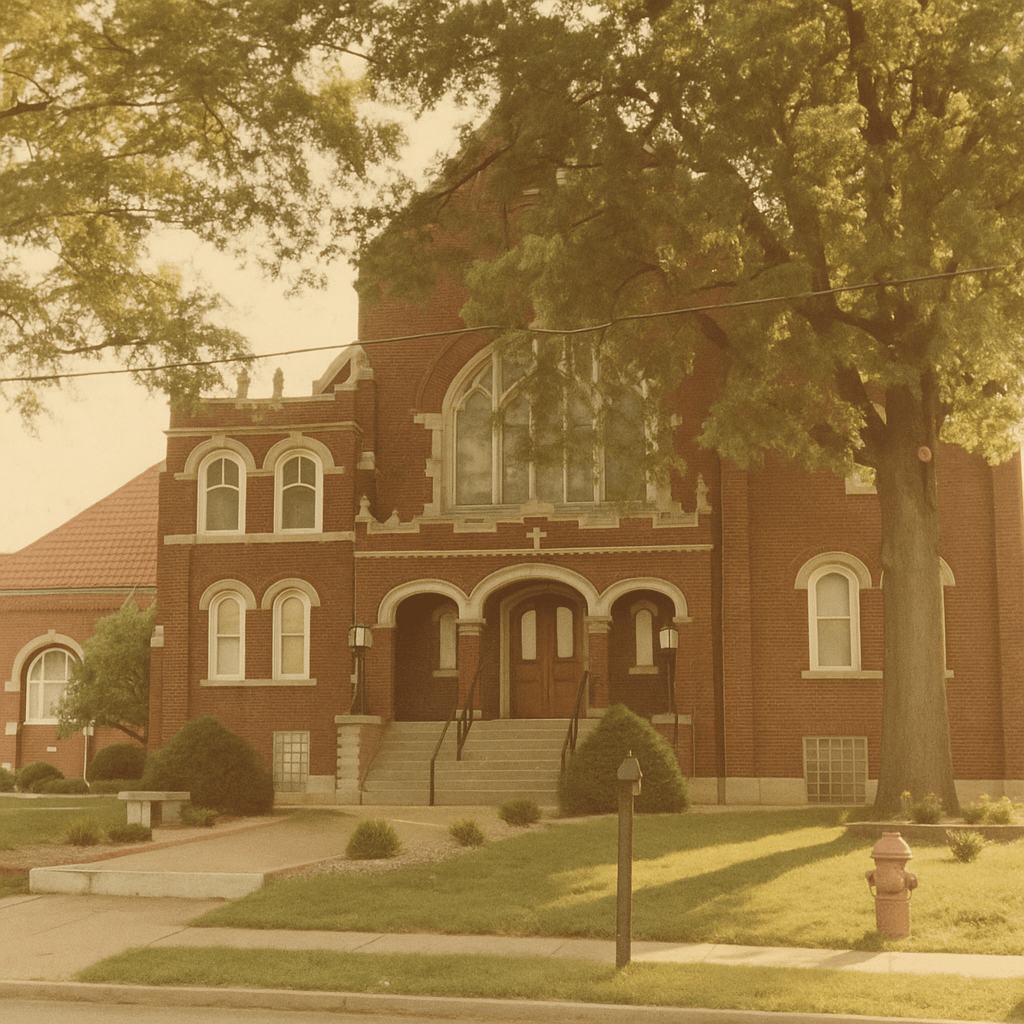
When I think back on my childhood going to church, the sound that comes first to mind isn’t the chatter of kids in Sunday school or the clatter of hymnals being closed. It’s the deep, booming baritone of Rev. Wintermeyer echoing through the sanctuary of Saint John’s United Church of Christ in Mehlville. He had a voice that could fill every corner of that old church, and every Christmas he sang O Tannenbaum — “Oh Christmas Tree” — in German. That song was enough to bring my dad to church each year, even if the rest of the calendar didn’t. Hearing it now, even in memory, still stirs something  inside me.

The church itself was a place of warmth and history. It had that comforting old-world feel — lots of dark wood, the scent of polish and hymnbooks, and light filtering through the stained-glass windows that painted the pews in color. It was both humble and beautiful, a place where time seemed to slow just a bit on Sunday mornings.

My mom taught Sunday school there every week alongside Miss Alice, who seemed to have a knack for quiet order. Eventually, I found myself teaching Sunday school too. By then I was old enough to understand how much work and love went into it. Later, I even coached the church’s softball team. The kids were the best part — energetic, funny, and full of heart. The parents, well… I learned early on that coaching means working with more than just players. Still, it was worth it for the laughter and the sense of belonging those games brought.

Saint John’s was where I was confirmed, where I learned a lot about faith — and perhaps even more about community. I served on the Church Council for a year which offered lessons of its own. Ultimately I learned, the Church wasn’t just a place of worship; it was a place where people showed up for each other. Over time, life moved on. The church isn’t a part of who I am anymore, but its presence has a way of lingering. When I drive by, I still feel something familiar, like a faint melody you can’t quite shake.

My parents are buried in the church cemetery, not far from that sanctuary where those sounds still seem to echo in my mind. It’s a quiet place, and standing there, I always feel the same comforting presence I knew as a child.

Looking back, I realize Saint John’s gave me more than sermons or hymns — it gave me relationships, lessons, and memories that continue to shape me. It’s where I learned that faith, at its best, lives in the people around you.

The Year My Sister Broke Her Shoulder

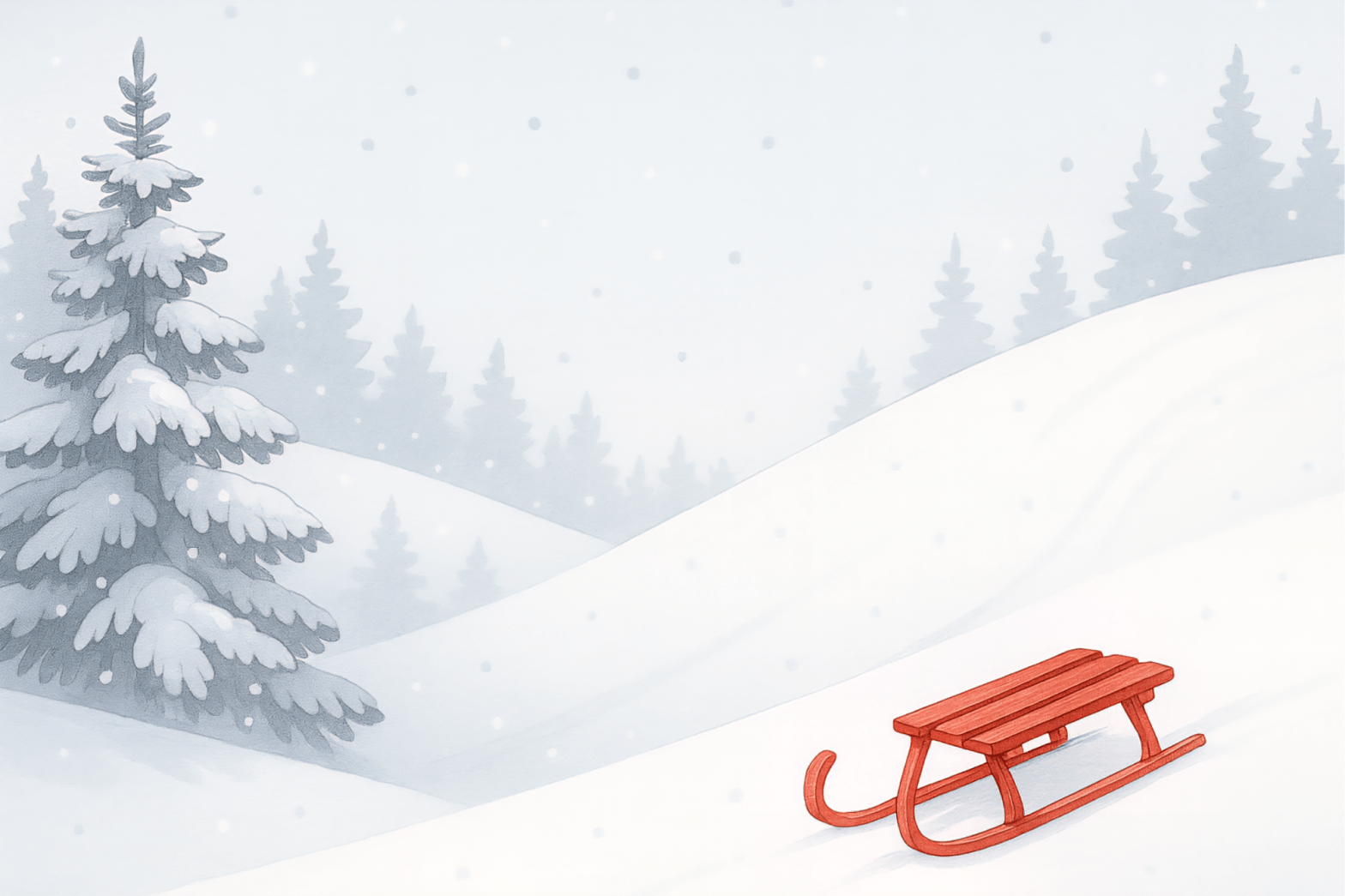
It was one of those winters when snow seemed endless. Storm after storm had piled high along Jackie Lane, and the world outside felt hushed and white. School had been canceled again, which to us children meant freedom—long hours bundled in boots and scarves, dragging sleds up and down the neighborhood hills.

The biggest hill belonged to a family down the street. It was steep enough to make your heart race before you even pushed off, and that morning the neighborhood kids had turned it into a track of packed-down snow. Laughter echoed as sleds flew, collided, and tumbled into heaps at the bottom.

Carole, always bold and eager, decided to go down on her own. I stood at the top watching as she leaned forward, her small figure quickly swallowed by speed. The sled carried her faster and faster, until it drifted slightly off course. At the bottom stood a wooden fence post, half-buried in snow but hard as stone. The sound of the collision—sled meeting post, Carole’s cry—cut through the air.

We rushed to her side. She was crumpled in the snow, clutching her shoulder, her face pale beneath the red of cold cheeks. In that moment she seemed so little, so fragile. The fun of the day evaporated into a frantic blur as we found a way to get her to the hospital.

I remember the waiting room, the smell of antiseptic, the stillness of my mother sitting beside her. It struck me as unusual that my father wasn’t there—he was at work when it happened, and he met us later at the hospital. His arrival brought both relief and a sense of how serious it all was. The doctor explained her shoulder was broken, and for weeks afterward Carole wore a sling that looked oversized against her small frame.

When I think back on that winter, I don’t remember the snow as much as I remember that feeling—the way childhood suddenly shifted from carefree to fearful in a matter of seconds. It was the first time I saw how quickly things could change, how fragile we really were, even in the middle of all that laughter and snow.

Snoopy


My sister Carole  is just thirteen and a half months younger than I am, and when we were kids, that small gap made us feel almost like twins. We were inseparable for so much of our early years—two companions moving through the world together, creating stories, adventures, and laughter out of whatever was in front of us.

Carole had the most amazing imagination. She could breathe life into the simplest of things, especially her stuffed animals. They weren’t just toys—they became real, with personalities and voices that she seemed to channel as naturally as if she were introducing us to new friends. Her Winnie the Pooh stands out the most in my memories. Somehow, he became part of the family, so alive with character that we all treated him as more than just fabric and stuffing. Over time he was loved nearly to pieces—literally falling apart—until he finally had to be put away. Even then, the memory of what she gave him lingered.

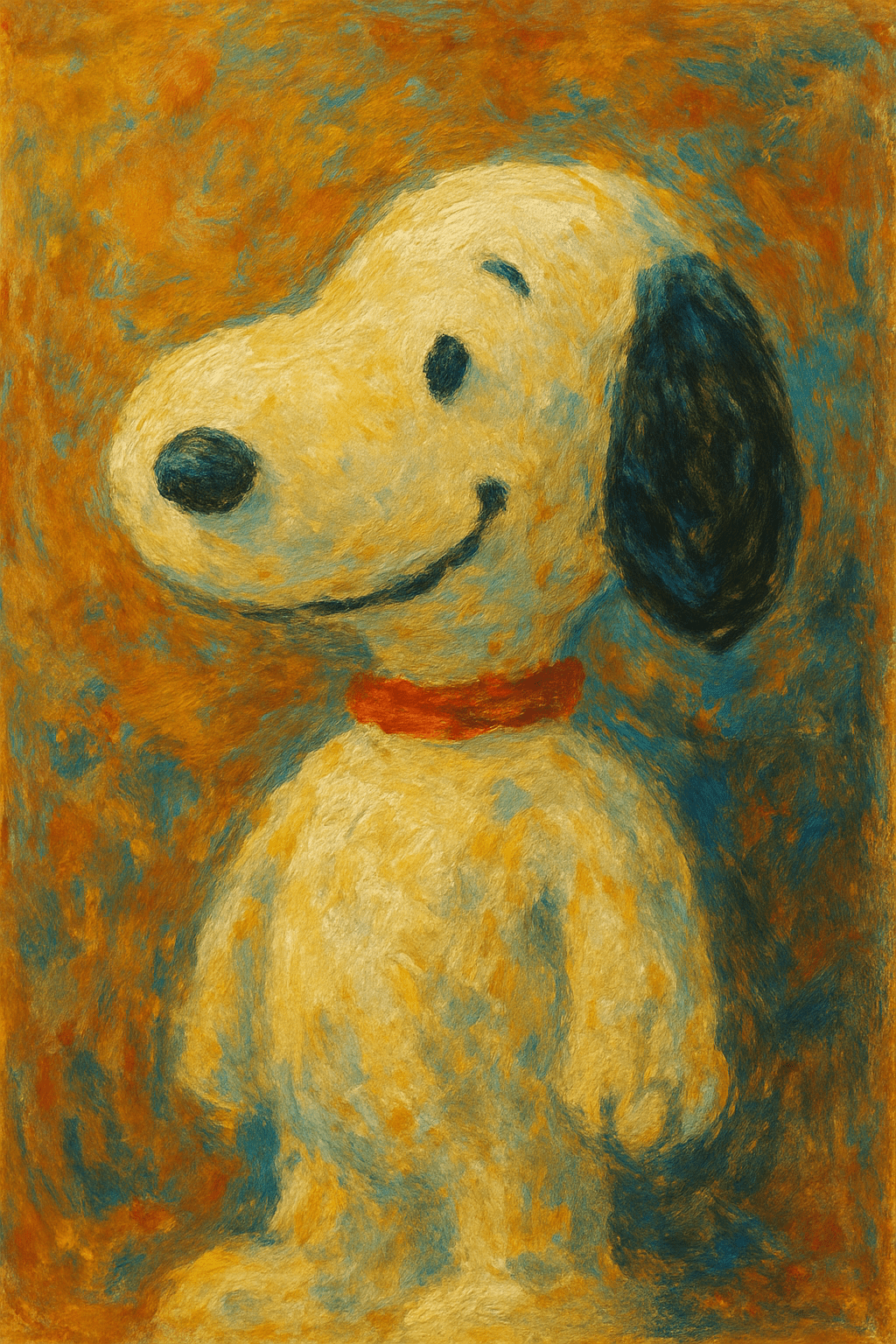
That sense of creativity shaped so much of our childhood together. One year for Halloween, my mother sewed costumes for us: Charlie Brown and Snoopy. She even made the masks out of paper mâché. Carole was Snoopy, of course, and she played the part perfectly. The nickname stuck with her for years afterward (she even used the costume to play Snoopy for special events), a little badge of honor that seemed to capture her spirit.

Our backyard often became the stage for whatever new idea Carole dreamed up. Sometimes it was a carnival, with games and activities for the whole neighborhood to enjoy. Other times, it was transformed into something bigger and bolder. I still remember the time we opened our own restaurant (if only for a day), proudly named by Carole: The  Feed Your Face Place. We sold pizzas, hot dogs, and hamburgers out of our kitchen window to the neighborhood kids, and for that afternoon, we felt like we were running something real. Carole always had a way of making pretend feel almost more genuine than the ordinary world.

As the years have passed, life carried us apart. We are no longer close.Yet when I think back to those days, I am filled with warmth and gratitude. Childhood is fleeting, but the memories stay—the games, the laughter, the shared secrets, the way my sister’s imagination colored everything we touched.

Carole was the heartbeat of so many of those moments. And it makes perfect sense that the imagination she showed as a child eventually led her into a career in advertising, where her creativity could truly shine. Today she is also a wife and a mom, roles she has embraced with the same energy and warmth she carried through our childhood.

Carole may not be a part of my daily life now, but she will always be a part of who I am. Those childhood years we shared are stitched into my memory like a favorite quilt—sometimes frayed, sometimes faded, but always warm. No matter how much time has passed, I will always carry with me the gift of her imagination and the joy of those days when we were just two kids, side by side, discovering the world together.

Sunday in the Park

Some of the happiest days of my childhood weren’t about big trips or special events. They were about something simple—packing up a lunch, spreading a blanket on the grass, and spending an afternoon together as a family.

It was the late 1960s and early 1970s, and our favorite spot was Carondelet Park in St. Louis. We didn’t need much—just sandwiches or maybe some fried chicken, a blanket, and the promise of time together. My parents would load us up, and often both of my grandmothers came along. Their voices, laughter, and gentle caring were something only a family can create.

I can still see the park: the rolling green hills, the shade of huge trees, and my sister and me running across the grass before the picnic blanket was even smoothed down. We made up games, chased each other, and wore ourselves out under the summer sun.

Behind us, the grown-ups had their rhythm—pulling food from the picnic basket, chatting easily, and laughing at stories only they shared. Every so often I’d glance back: my grandmothers in their dresses, my father stretched out, my mother smiling. And yes, I sometimes eavesdropped on their “grown-up” talk. I didn’t have words for it then, but the warmth of those moments has never left me.

One landmark I always noticed was the old house on the hill. I learned later it had belonged to the Lyle family, among the first to live on this land in the 1700s. Back then, it simply seemed mysterious—a reminder that the park had stories much older than mine.

Sometimes we visited Suson Park too, with its animals and fishing ponds. That felt like a real adventure—watching goats, horses, and pigs, seeing ripples on the ponds, and imagining the thrill of catching a fish myself. It wasn’t far from home, but it felt like another world.

Looking back, I realize those picnics weren’t just outings. They were moments that shaped my childhood. We weren’t searching the Internet for entertainment or scrolling for the perfect spot—we were simply together. Three generations, connected by love, laughter, and the comfort of familiar places.

And that’s what made those days unforgettable

Aunt Myrtle

Aunt Myrtle wasn’t really my aunt at all—she was my Uncle Dale’s mother. But since my Aunt Elaine and Uncle Dale never had children, and since she fit so easily into the fabric of our family, she became like a third grandmother to my sister and me. Titles never mattered much anyway—what mattered was the love she gave us and the way she showed up in our lives.

Her husband had passed away only a few months after retiring, leaving her to live the last twenty years of her life on her own. Uncle Dale was her only child, and since he and my aunt lived out of town, she often spent long stretches of time by herself. Still, she carried herself with quiet strength and an unassuming kindness that made her a steady presence at family gatherings.

When I was young, Aunt Myrtle had a way of joining me in my world. I can still see her, lowering herself to the floor without hesitation to help me explore whatever new toy I’d unwrapped. She wasn’t just an observer—she played right alongside me, laughing and marveling as if she were a kid again herself. As a kid, It makes you feel seen. It’s the kind of memory that stays stitched into your heart.

As I grew older and started driving, I would visit her on my own. She and my Grandma Wollberg were close friends. They talked on the phone regularly and (because Aunt Myrtle drove) they sometimes went out together for lunch—two strong women from another generation, keeping each other company and sharing in life’s small joys.

Aunt Myrtle lived well into her eighties, outlasting all of her peers. In the end, she was the last of that generation who was still alive for me to know, a living link to the family stories and traditions that shaped who we are.

Though she wasn’t related by blood, Aunt Myrtle was family in every way that mattered. When she passed, her absence left a quiet emptiness at our gatherings. I still miss her warmth, her laughter, and the way (through the years) that she became an integral part of our family.

New York 1971

The summer of 1971 gave me my first taste of the wider world. Our family packed up the car and drove east to visit my Aunt Elaine and Uncle Dale in Whippany, New Jersey. At the time, a two-day drive felt monumental. I had never been that far from home, and every mile seemed to stretch me further into something new. The smell of warm vinyl car seats, the low drone of the highway, the endless gas stations and roadside diners—it all felt like an initiation into a real adventure.

Even the overnight stops left their mark. At one motel, we found a pool, which seemed like the perfect escape after hours in the car. But when night fell, the floodlights drew bats. They swooped low and fast sending us scrambling for cover. I remember the sound of their wings, sharp and papery, and the mixture of laughter and fear. At the time it was chaos; now it’s the kind of memory that makes me smile at how travel always carries the unexpected.

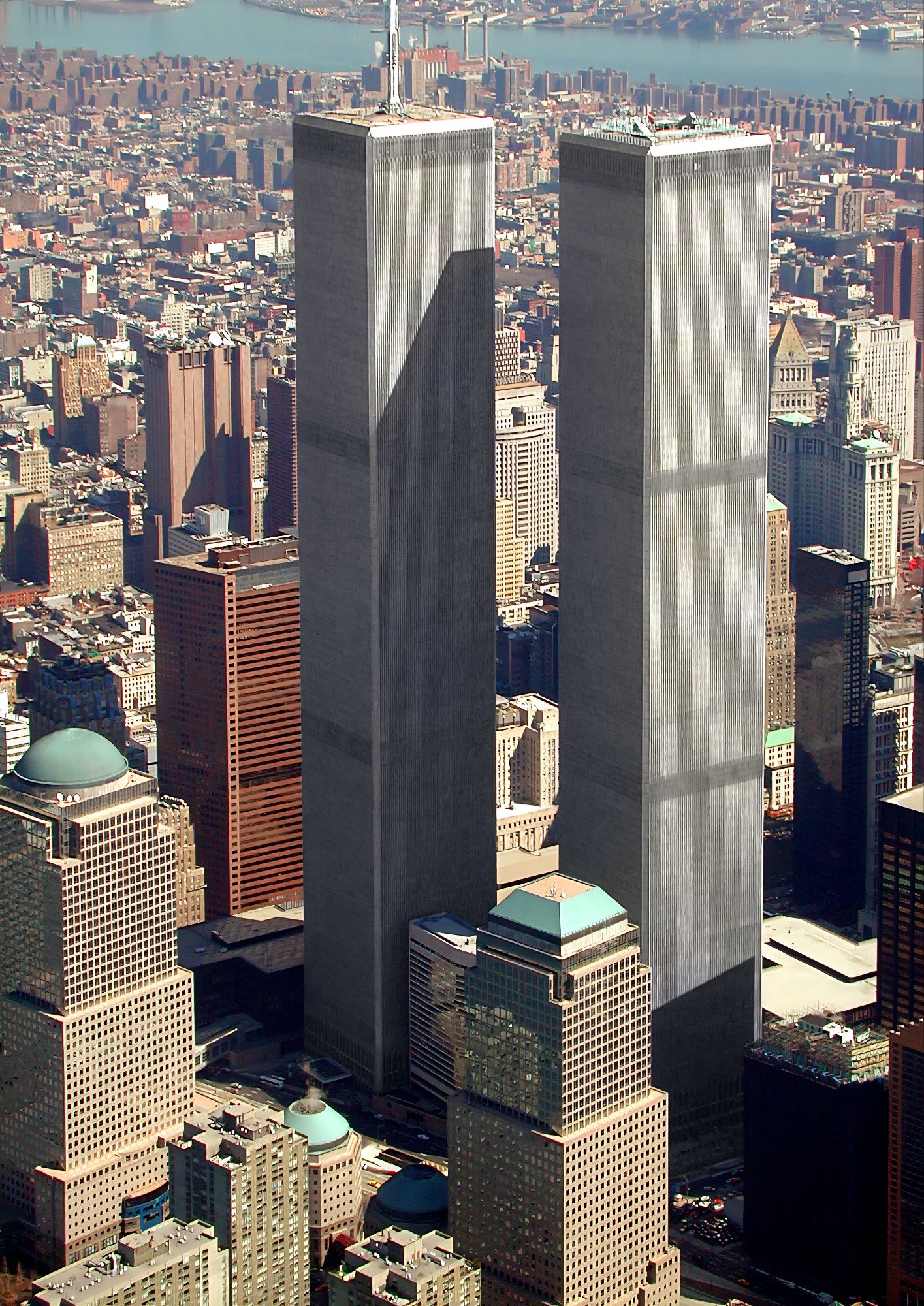
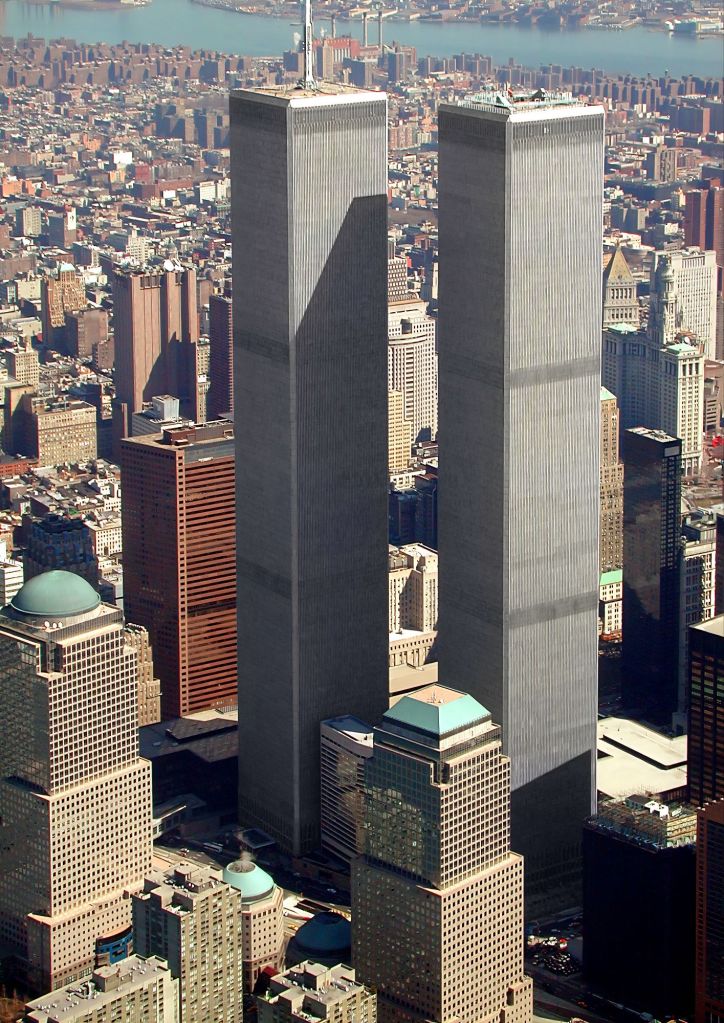
When we finally arrived in Whippany, Elaine and Dale’s home felt safe and welcoming, but the real thrill was the trip into New York City. Driving through one of the tunnels from New Jersey, the car filled with the echo of engines and the thick smell of exhaust. Then suddenly, daylight opened up to the New York skyline that took my breath away. Those towering buildings—so impossibly tall—seemed to lean over the car as we craned our necks to see the tops. The World Trade Center, still brand-new, gleamed like a promise of the future. We had no way of knowing the tragedy that would occur there later.

At the Statue of Liberty, I remember looking up at her raised torch, feeling small in her shadow. Later, in the Garment District, I learned firsthand how fast the city moves. One moment I was gawking at storefronts; the next, a cart piled with dresses came flying toward me, pushed by a man shouting for me to get out of the way. It was funny in hindsight, but in that moment it felt like a lesson: in New York, the city doesn’t slow down for anyone.

The traffic was its own kind of spectacle—horns blaring in every direction, yellow cabs weaving recklessly, voices rising above the street noise. For a ten year old kid from Saint Louis, it was overwhelming, but not in a bad way. It felt alive, urgent, electric.

Looking back, that trip shaped my desire for travel. New York was the first place that made me understand the thrill of a city—its noise, its energy, its sheer size. Instead of being intimidated, I loved it. Even then I knew I would return, and I have, several times over the years. Yet nothing has ever quite equaled that first visit, when the world cracked open a little wider and showed me just how big and thrilling it could be.